Table of Contents
ToggleThe right ceiling lighting can make or break a home office. Poor lighting leads to eye strain, headaches, and a workspace that feels more like a cave than a place to get things done. Good lighting, on the other hand, improves focus, reduces fatigue, and makes the room look intentional. Whether someone’s converting a spare bedroom or finishing a basement office, the ceiling fixture sets the tone for everything else. This guide covers practical lighting options that work for different ceiling heights, budgets, and design preferences, no fluff, just what actually makes a difference.
Key Takeaways
- Home office ceiling lighting eliminates eye strain and improves focus by distributing even light across the entire room, reducing harsh shadows and maintaining alertness during long work sessions.
- Recessed lighting offers a clean, modern look with flexible brightness control via dimmers and smart bulbs, making it ideal for contemporary offices where minimalism matters.
- Pendant lights work best in rooms with higher ceilings and add design personality while serving as functional light sources when hung 30–36 inches above desk height.
- Track lighting provides unmatched flexibility for multipurpose home offices, allowing adjustable heads to redirect light toward desks, whiteboards, or bookshelves without rewiring.
- Flush and semi-flush mount fixtures solve low-ceiling challenges and pair effectively with layered lighting strategies that combine ambient, task, and accent sources for maximum comfort.
- Layering overhead, task, and accent lighting with independent dimmer controls creates an adaptable workspace that adjusts to different times of day and work activities.
Why Ceiling Lighting Matters in Your Home Office
Ceiling lighting serves as the primary ambient light source in most home offices. Unlike desk lamps or floor lights, overhead fixtures distribute light across the entire room, reducing shadows and creating a baseline level of brightness.
Poor ceiling lighting creates uneven illumination, which forces the eyes to constantly adjust between bright and dim areas. This leads to fatigue, especially during long work sessions. A well-planned ceiling fixture eliminates harsh contrasts and provides consistent light levels.
Color temperature also plays a role. Daylight-balanced bulbs (4000–5000K) mimic natural light and help maintain alertness. Warmer temps (2700–3000K) work better for evening hours or creative tasks that don’t require intense focus.
Ceiling fixtures also free up desk and floor space. In smaller offices, this matters. A recessed or flush-mount fixture keeps the room open and uncluttered, while still delivering the lumens needed for productive work.
Recessed Lighting for a Clean, Modern Look
Recessed lighting (also called can lights or pot lights) installs flush with the ceiling, leaving no visible fixture below the surface. This makes it ideal for contemporary offices where minimalism is the goal.
Each recessed fixture requires a housing can that fits between ceiling joists. Standard spacing is 4 to 6 feet apart, depending on ceiling height and the beam angle of the bulbs. For an 8-foot ceiling, 4-inch cans with LED bulbs rated at 600–800 lumens each usually provide adequate coverage.
Installation involves cutting holes in drywall and running electrical cable between fixtures. This is straightforward in new construction or exposed attics, but retrofitting a finished ceiling is messier. Remodel housings with built-in clips simplify the job, they clamp to the drywall without needing access from above.
Dimmer-compatible LED trims offer flexibility. Someone can crank the brightness for detailed work in the morning, then dial it down for video calls or late-afternoon tasks. Smart bulbs add another layer of control, allowing adjustments via app or voice command.
Recessed lighting works well when paired with other fixture types for layered setups, which address both ambient and task lighting needs. Always check local codes, some jurisdictions require IC-rated (insulation contact) housings if insulation is present above the ceiling.
Pendant Lights That Make a Design Statement
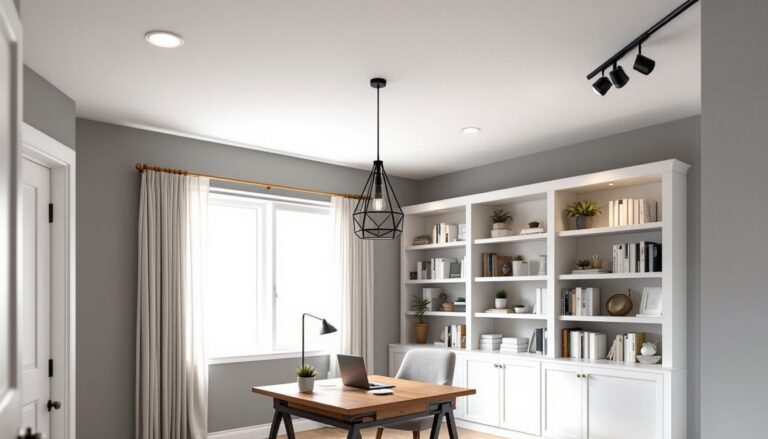
Pendant lights hang from the ceiling on cords, chains, or rods, and they double as both light sources and focal points. They’re a smart choice for offices with higher ceilings (9 feet or more) or where design matters as much as function.
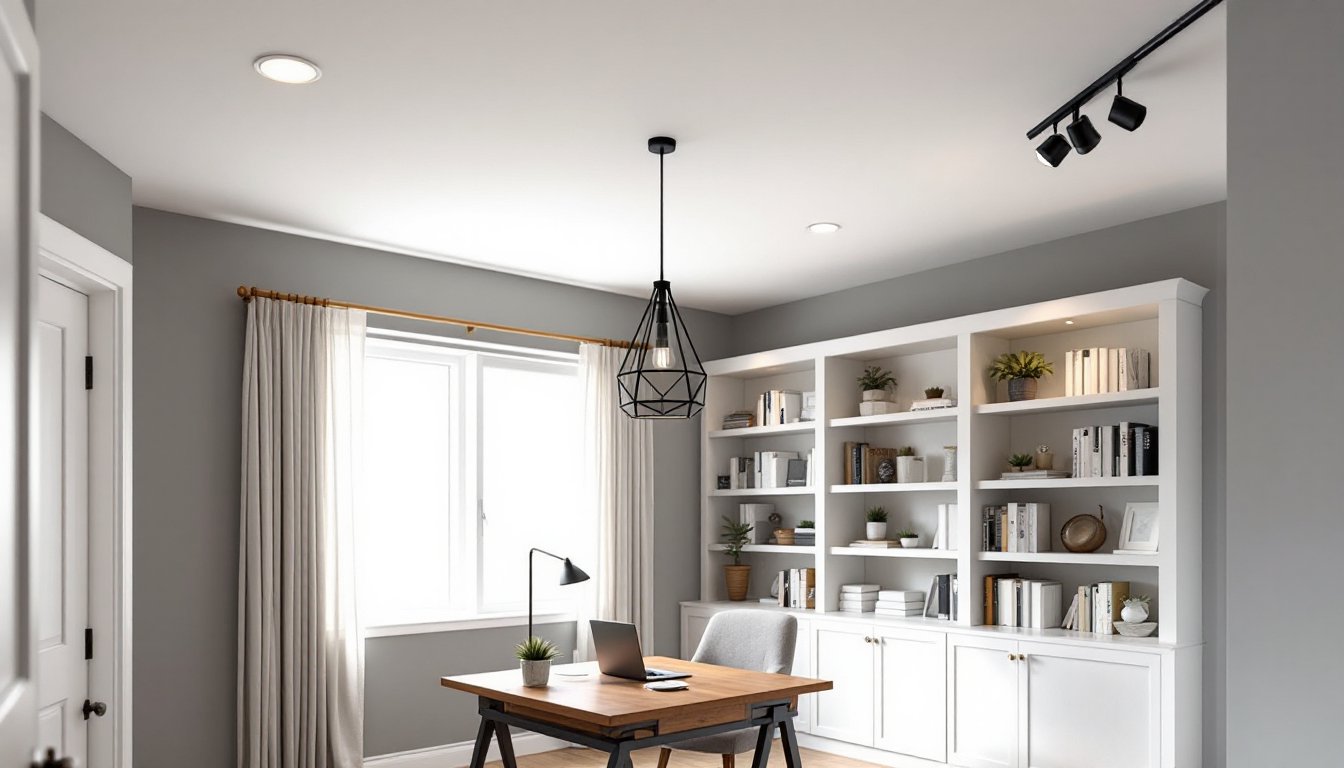
Single large pendants work over a central desk or reading area. For longer workspaces, multiple smaller pendants in a row create balanced illumination without the visual weight of a single oversized fixture. Hang them 30 to 36 inches above the desk surface to avoid glare while keeping the light focused where it’s needed.
Materials range from metal and glass to wood and fabric shades. Opaque shades direct light downward, which is great for task lighting but can leave the upper walls and ceiling dim. Translucent or perforated shades spread light more evenly, contributing to ambient lighting as well.
Installation is simpler than recessed lighting, most pendants mount to a standard ceiling box. If the existing box isn’t centered over the desk, a swag hook and plug-in cord kit can reposition the light without rewiring. Just make sure the hook screws into a joist or uses a toggle anchor rated for the fixture’s weight.
Pendants shine in home offices that prioritize personality. A sculptural fixture adds visual interest to creative spaces, especially when paired with neutral walls and minimal decor. Keep cord length adjustable if possible, needs change when furniture gets rearranged.
Track Lighting for Flexible, Adjustable Illumination
Track lighting mounts to the ceiling and supports multiple movable light heads along a linear rail. Each head pivots and rotates, letting someone aim light exactly where it’s needed, over a desk, onto a whiteboard, or toward bookshelves.
Standard tracks come in 4-foot and 8-foot lengths, with the option to join multiple sections using connectors. Heads attach via a twist-lock or clip mechanism, and most systems allow adding or removing heads as needs change. This makes track lighting more adaptable than fixed fixtures.
Track systems run on line voltage (120V) or low voltage (12V). Line-voltage tracks are simpler and work with standard bulbs, but low-voltage systems offer more compact, focused heads and run cooler. Both types need a compatible power supply, verify before mixing components.
For home offices, track lighting excels in multipurpose spaces. If the room doubles as a craft area, library, or video studio, adjustable heads can shift focus without rewiring. Aim heads at 30 to 45 degrees from vertical for the best coverage and minimal glare on screens.
Installation involves mounting the track to a ceiling box or directly to joists using screws. Surface-mount tracks work on drywall, while suspended tracks hang from cables for a more industrial look. Paint the track to match the ceiling if a low-profile appearance is preferred. Track lighting pairs well with techniques that transform functional spaces into visually dynamic rooms.
Flush and Semi-Flush Mount Fixtures for Low Ceilings
Flush-mount fixtures sit directly against the ceiling with no gap, while semi-flush mounts hang a few inches down on a short stem or chain. Both are ideal for offices with ceiling heights under 8 feet, where pendants or chandeliers would feel cramped.
Flush mounts typically consist of a metal or plastic base, a diffuser (glass or acrylic), and an internal socket for one or more bulbs. The diffuser spreads light evenly across the room, avoiding harsh hot spots. Semi-flush mounts create a bit more visual interest and can accommodate decorative shades or globes.
Choose fixtures rated for the room’s square footage. A general rule: multiply room area by 1.5 lumens per square foot for ambient lighting in a home office. A 120-square-foot office needs around 1,800 lumens total. If the fixture holds three bulbs, each should deliver roughly 600 lumens.
Installation is straightforward, most flush and semi-flush mounts attach to a standard ceiling box with a mounting bracket and wire nuts. Turn off power at the breaker before starting. If the existing box is loose or damaged, replace it with a pancake box or fan-rated box for better support.
These fixtures are practical and understated. They don’t steal attention, which works well in offices where the focus should stay on work, not decor. For a custom touch, swap the stock diffuser for a frosted or textured glass shade that softens the light. Flush mounts also pair well with layered lighting strategies that combine overhead and task sources.
Layering Your Lighting for Maximum Comfort and Function
Relying on a single ceiling fixture rarely delivers the best lighting experience. Layering means combining ambient, task, and accent lighting to create a flexible, comfortable workspace.
Ambient lighting comes from ceiling fixtures, recessed cans, flush mounts, or pendants. This is the foundation. It should provide even, shadow-free illumination across the room.
Task lighting targets specific work areas. Desk lamps, under-shelf strips, or adjustable track heads fall into this category. Task lights should deliver focused brightness (around 50–75 foot-candles at the work surface) without causing glare on screens.
Accent lighting highlights architectural features, artwork, or bookshelves. This is optional in a home office but adds depth and visual interest. A small spotlight or LED strip behind a monitor can reduce eye strain by minimizing contrast between the bright screen and dark background.
Control each layer independently with separate switches or smart controls. This lets someone adjust lighting based on time of day or activity. Morning tasks might need full overhead brightness and a desk lamp, while afternoon video calls benefit from softer ambient light and a ring light for the camera.
Dimmers are essential. They extend bulb life, save energy, and allow fine-tuning brightness levels. Make sure bulbs are labeled dimmable, not all LEDs are.
Layering also helps avoid common mistakes. A too-bright ceiling fixture causes screen glare. A dim overhead with only a desk lamp creates harsh shadows. Balanced layers eliminate both issues. Many professionals use techniques for lighting adjustments in multi-use spaces to keep the room functional at all hours.
Conclusion
The right ceiling lighting turns a home office from functional to comfortable. Recessed fixtures offer clean lines, pendants add personality, track systems provide flexibility, and flush mounts solve low-ceiling challenges. Layering these sources with task and accent lighting creates a workspace that adapts to different needs throughout the day. Choose fixtures based on ceiling height, room size, and how the space gets used, then adjust as needed. Good lighting isn’t a one-time decision: it’s an evolving part of a productive home office.