Table of Contents
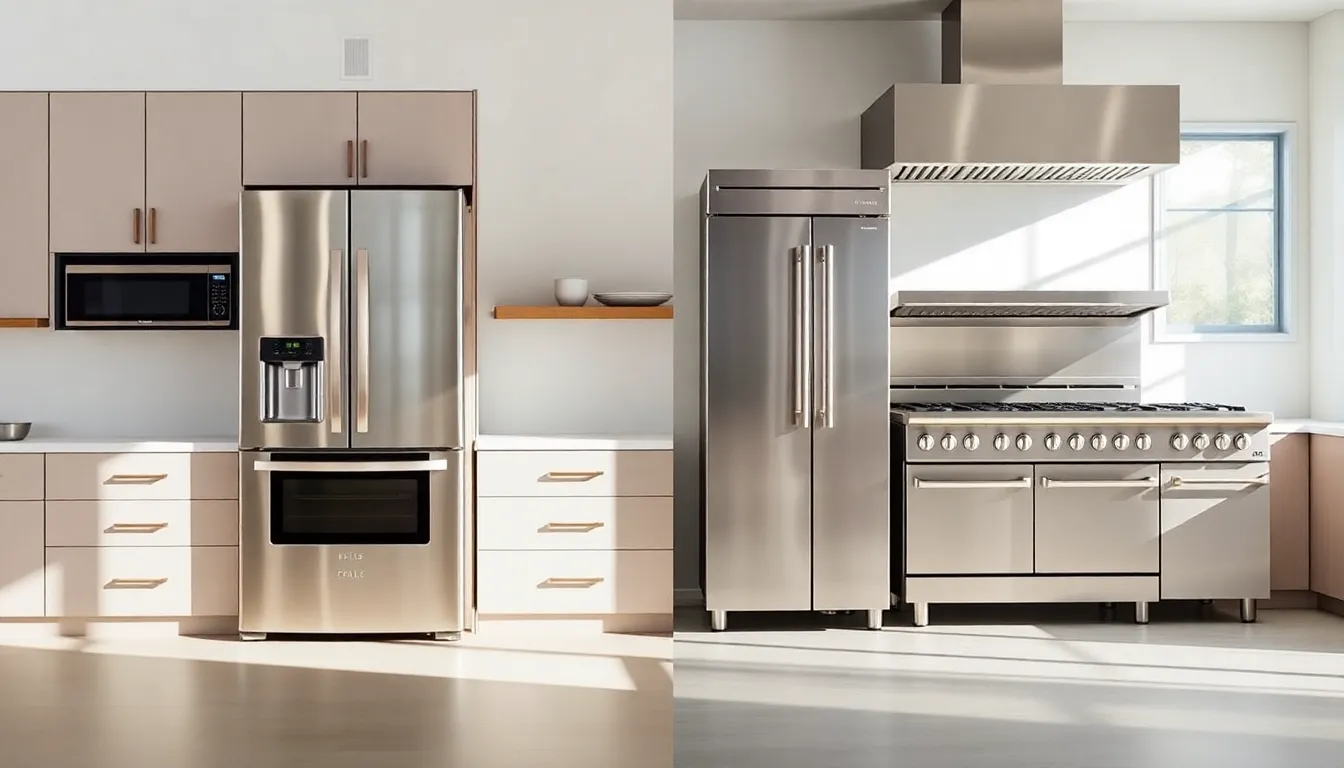
ToggleHome appliances vs commercial appliances, it’s a question that comes up more often than you’d think. Maybe you’re outfitting a new kitchen, upgrading your laundry setup, or considering whether that restaurant-grade refrigerator is worth the investment for your home. The distinction matters because these two categories serve different purposes, operate under different conditions, and come with vastly different price tags.
Home appliances are built for everyday household use. Commercial appliances are designed for businesses that demand constant, heavy-duty performance. Understanding what separates them helps buyers make smarter decisions and avoid costly mistakes. This guide breaks down the core differences in design, durability, cost, and efficiency so you can pick the right equipment for your situation.
Key Takeaways
- Home appliances are designed for everyday residential use, prioritizing convenience, aesthetics, and energy efficiency with a typical lifespan of 10–15 years.
- Commercial appliances are built for heavy-duty, continuous operation in businesses, using industrial-grade materials that can last 15–25 years under intense use.
- When comparing home appliances vs commercial appliances, performance is the biggest differentiator—commercial dishwashers complete cycles in 2–4 minutes versus 45–60 minutes for residential models.
- Commercial appliances cost significantly more upfront ($2,000–$10,000+) and consume 2–5 times more energy than their home appliance counterparts.
- Before installing commercial equipment at home, check local building codes and factor in specialized electrical requirements, ventilation needs, and higher repair costs.
- For most households, home appliances offer better value—they’re appropriately sized, energy-efficient, and designed for typical residential electrical systems.
What Defines Home Appliances
Home appliances are machines designed for residential settings. They handle typical household tasks like cooking, cleaning, and food storage. Think refrigerators, washing machines, dishwashers, ovens, and microwaves.
These appliances prioritize convenience and ease of use. Manufacturers design them for families or individuals who use them a few hours each day. A home refrigerator, for example, opens and closes maybe 20 times daily. A home oven might run for an hour or two during dinner prep.
Home appliances also focus on aesthetics. They come in various finishes, stainless steel, matte black, white, to match kitchen décor. Size matters too. Home appliances fit standard cabinet dimensions and doorways.
Energy efficiency ratings like ENERGY STAR certification are common selling points for home appliances. Manufacturers optimize them to keep utility bills manageable for average consumers. They’re built to last roughly 10 to 15 years with moderate use.
Repair costs for home appliances tend to be reasonable. Parts are widely available, and most technicians can service them. Warranties typically cover 1 to 5 years depending on the brand and component.
What Defines Commercial Appliances
Commercial appliances serve businesses, restaurants, hotels, hospitals, and industrial facilities. They’re engineered for continuous, high-volume operation. A commercial refrigerator in a busy restaurant might open 200 times per day. A commercial oven could run for 12 hours straight.
These machines are built differently from home appliances. Commercial appliances use heavier-gauge materials, stronger motors, and industrial-grade components. They prioritize function over form. You won’t find sleek finishes or decorative handles. Instead, you get practical designs meant for quick cleaning and durability.
Commercial appliances also meet stricter safety and health codes. Restaurants need equipment that complies with NSF (National Sanitation Foundation) standards. This certification ensures appliances can be properly sanitized and won’t harbor bacteria.
Size is another factor. Commercial appliances are often larger and require specialized installation. A commercial range might need dedicated gas lines and ventilation systems that exceed residential building codes.
Lifespan expectations differ too. Commercial appliances are built to handle punishment. With proper maintenance, they can last 15 to 25 years even under heavy use. But, when they break, repairs often require specialized technicians and parts that cost more than residential equivalents.
Performance and Durability Compared
Performance separates home appliances from commercial appliances more than any other factor.
Consider a home dishwasher. It runs a cycle in 45 minutes to an hour. That’s fine for a family washing dishes after dinner. A commercial dishwasher completes a cycle in 2 to 4 minutes. Restaurants need that speed to keep up with customer demand.
The same pattern applies to ovens. Home ovens take 15 to 20 minutes to preheat. Commercial ovens reach cooking temperature in 5 minutes or less. They also recover heat faster after you open the door, a critical feature when you’re cooking continuously.
Durability follows similar lines. Home appliances use lighter materials and smaller components. They’re adequate for residential workloads but struggle under commercial demands. Put a home appliance in a restaurant, and it’ll likely fail within months.
Commercial appliances use stainless steel construction, reinforced hinges, and heavy-duty compressors. They’re overbuilt by residential standards because they need to survive constant abuse.
Here’s a practical example: a home refrigerator compressor might cycle on and off 8 to 10 times daily. A commercial unit’s compressor is designed to run almost continuously without overheating or wearing out prematurely.
Noise and Power Requirements
Commercial appliances are louder. They have bigger motors and fans. Most homeowners find commercial equipment too noisy for residential spaces.
Power requirements differ significantly too. Many commercial appliances need 208V or 240V electrical connections. Some require three-phase power, which most homes don’t have. Installing this infrastructure can add thousands to your project budget.
Cost and Energy Efficiency Considerations
Home appliances cost less upfront. A quality home refrigerator runs $1,000 to $3,000. A commercial refrigerator starts around $2,000 and can exceed $10,000 for larger models.
But upfront cost tells only part of the story. Operating costs matter too.
Home appliances are optimized for energy efficiency. Manufacturers compete on ENERGY STAR ratings and low electricity consumption. A modern home refrigerator uses about 400 to 600 kWh annually.
Commercial appliances prioritize performance over efficiency. They consume more power because they work harder. A commercial refrigerator might use 1,500 to 3,000 kWh per year. That adds up on utility bills.
Here’s where things get interesting for home appliances vs commercial appliances in residential settings. Some homeowners buy commercial ranges for their power and speed. But they often underestimate the energy costs. A commercial range can burn through gas or electricity at rates that make their home utility bills jump significantly.
Long-Term Value
For businesses, commercial appliances offer better long-term value. They last longer under heavy use and minimize downtime. A restaurant can’t afford a broken refrigerator, the lost inventory and business interruption cost far more than the equipment itself.
For homeowners, residential appliances almost always make more financial sense. They cost less, use less energy, and match typical household demands. Buying commercial equipment for home use usually means paying extra for capacity you’ll never need.
Choosing the Right Appliances for Your Needs
The right choice depends entirely on how you’ll use the equipment.
For typical households, home appliances are the clear winner. They’re sized appropriately, priced reasonably, and designed for residential electrical systems. They also look better in home settings and run quieter.
Commercial appliances make sense in specific situations:
- Home-based catering businesses that cook at commercial volumes
- Large families who genuinely need extra capacity
- Serious home chefs who want restaurant-level performance and understand the trade-offs
- Hybrid spaces that function as both home and business
Before buying commercial equipment for home use, check local building codes. Many areas restrict commercial appliances in residential buildings due to ventilation, electrical, and safety requirements. Installation costs can exceed the equipment price.
Also consider maintenance. Commercial appliance technicians charge more per visit. Parts take longer to source. Warranties often require professional installation and regular servicing to remain valid.
Questions to Ask Before Buying
- How often will this appliance run each day?
- Does my electrical system support commercial equipment?
- Will I need special ventilation or gas lines?
- Can local technicians service this brand?
- Does the warranty cover residential use?
Answering these questions honestly prevents expensive mistakes. Most people overestimate their needs and underestimate installation complexity.