Table of Contents
ToggleDeck planters turn a plain outdoor space into a living oasis without sacrificing square footage. Whether someone’s working with a compact balcony or a sprawling second-story deck, the right planter setup adds privacy, color, and vertical interest while keeping the floor clear for furniture and foot traffic. The best part? Most deck planter projects require minimal carpentry skills and can be completed in a weekend. This guide covers practical planter styles, DIY builds, and plant selection strategies tailored to deck conditions, sun exposure, weight limits, and seasonal maintenance included.
Key Takeaways
- Deck planter ideas can transform compact outdoor spaces into vibrant gardens without sacrificing floor space or requiring advanced carpentry skills.
- Check your deck’s load capacity (typically 50 pounds per square foot) before installing large planters, as saturated containers with soil and plants can exceed 200 pounds.
- Railing planters, corner boxes, tiered designs, and DIY cinder block or cedar builds offer flexible solutions for different deck layouts and structural limitations.
- Match plants to sun exposure—full-sun decks suit tomatoes and lavender, while shade areas support hostas and ferns—and group plants by water needs to prevent uneven growth.
- Proper drainage with elevated planters and weep holes prevents deck rot and pest access while reducing water damage to composite decking.
- Use quality potting mix, apply slow-release fertilizer at planting, and relocate containers or wrap them in cold climates to protect against winter freeze-thaw damage.
Why Deck Planters Are Essential for Outdoor Living
Deck planters solve three common outdoor living problems: lack of greenery, harsh sightlines, and wasted vertical space. Unlike in-ground garden beds, planters offer mobility, they can move with the sun, get tucked away before a storm, or relocated when the deck layout changes.
Weight considerations matter. A saturated 24-inch planter with soil and a shrub can exceed 200 pounds. Before adding multiple large containers, check the deck’s load capacity. Most residential decks are built to handle 50 pounds per square foot (live load per IRC), but older structures or cantilevered sections may require reinforcement. Distributing weight over joists rather than mid-span reduces stress.
Planters also address drainage without the mess of ground contact. Elevated planters keep roots dry and reduce pest access, while built-in reservoirs or false bottoms prevent water from pooling against the deck boards, a common cause of rot. For composite decking, this separation is especially important since trapped moisture accelerates mold growth in hollow cores.
Finally, planters provide microclimates. A row of tall planters on the west side of a deck creates afternoon shade and wind buffering. Shorter containers tucked into corners trap warmth, extending the growing season for herbs and peppers by a few weeks on either end.
Best Planter Styles for Different Deck Types
Railing Planters for Space-Saving Greenery
Railing planters clip or hook directly onto deck rails, freeing up floor space for seating. They work best on decks with standard 2×4 or 2×6 top rails and code-compliant baluster spacing (IRC requires gaps no wider than 4 inches to prevent falls).
Saddle-style planters straddle the top rail with adjustable brackets. Most models fit rails 3.5 to 5.5 inches wide (actual dimensions of nominal 4×4 or 6×6 posts). Look for galvanized or stainless steel hardware, plastic clips crack under UV exposure and freeze-thaw cycles.
Bracket-mount planters hang from the exterior side of the railing, keeping the deck edge clear. Verify that fasteners penetrate into solid rail material, not just decorative trim. For vinyl or composite railings, use backing blocks or toggle bolts rated for outdoor use to prevent pullout.
Weight limits vary by manufacturer, but most railing planters max out around 20 pounds when saturated. That’s enough for annuals, trailing vines, or compact herbs, skip the dwarf conifers. Water runoff is inevitable, so position planters where drips won’t stain siding or land on lower-level patios.
Corner and Tiered Planters for Maximum Impact
Corner planters turn awkward 90-degree intersections into focal points. Built-in benches with integrated planter boxes are a popular DIY option: frame the corner with pressure-treated 2×6 lumber, add a hinged seat lid for hidden storage, and line the interior with pond liner before filling with soil. The seat doubles as a step stool for watering and deadheading.
Tiered planters create vertical gardens on compact footprints. A three-tier pyramid-style planter measuring 48 inches at the base and 36 inches tall can hold 15–20 plants while occupying less than 11 square feet. This style suits elevated planter boxes that lift greenery to eye level without requiring rail mounting.
For multi-level decks, place larger planters on lower tiers where structural support is stronger. Upper-level decks should prioritize lightweight materials like fiberglass or foam-core resin planters that mimic the look of ceramic or concrete at a fraction of the weight.
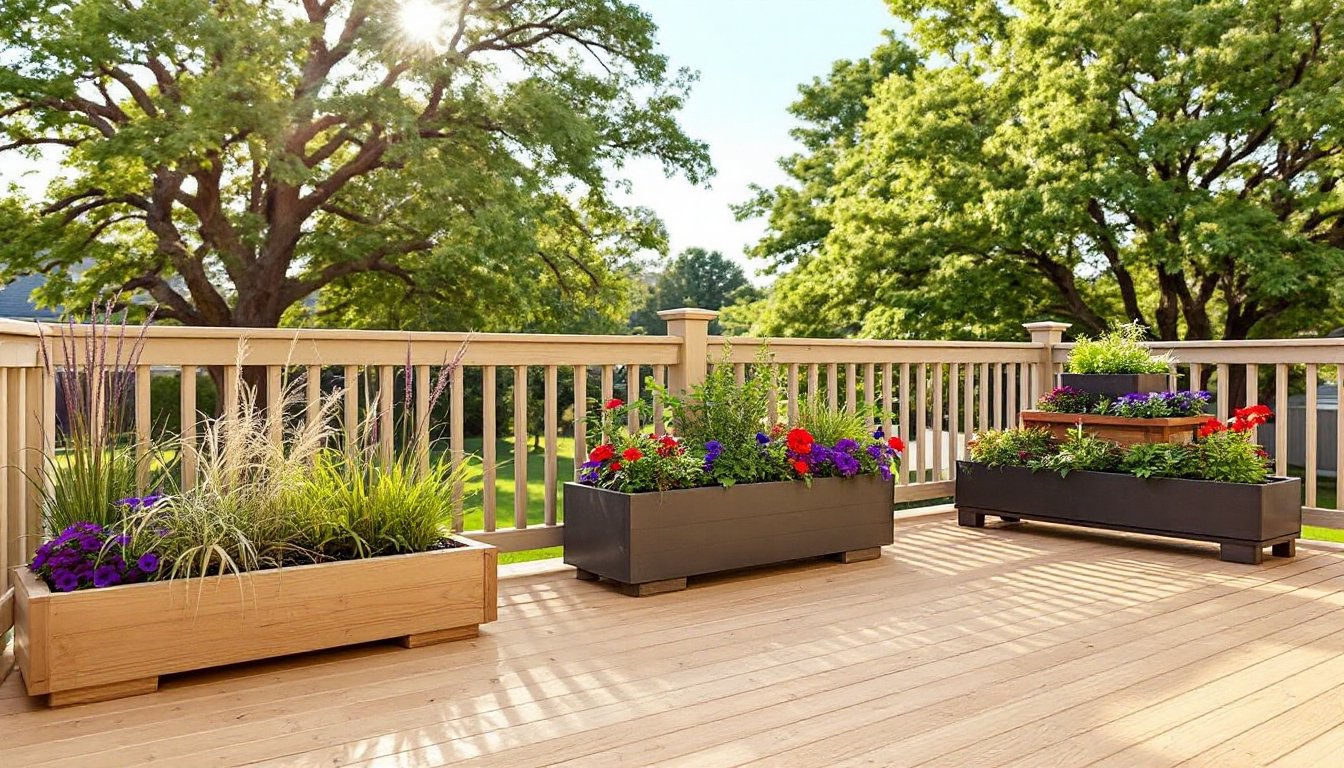
Trough planters work well along deck perimeters. Standard sizes run 36 to 72 inches long, 12 to 18 inches wide, and 12 to 16 inches deep, enough root depth for ornamental grasses, small shrubs, and cascading flowers. Cedar and redwood troughs handle weather well, but require annual sealing. Powder-coated metal troughs offer clean lines and last decades, though they conduct heat rapidly in direct sun (root scorching is a real risk with dark finishes).
Creative DIY Deck Planter Projects
Cinder block planters offer a modular, no-cut build. Stack blocks in staggered rows (like brickwork), leaving the cells upward-facing. Fill cells with potting mix and plant directly into the openings. A 4×4 block wall creates 32 planting pockets. Use construction adhesive between layers for stability, and drill weep holes in the bottom course for drainage. Cinder block is heavy, figure 30 pounds per block, so this works best on ground-level decks or reinforced structures.
Pallet planters repurpose heat-treated lumber (look for “HT” stamps, not “MB,” which indicates methyl bromide treatment). Stand a pallet upright, staple landscape fabric to the back and bottom, fill the gaps between slats with soil, and plant succulents or shallow-rooted annuals in the openings. Lean the pallet against a deck rail or wall, or mount it with L-brackets for a living wall effect.
Cedar box planters deliver a custom look with basic carpentry. A simple design uses four 1×12 cedar boards (actual dimensions: 0.75 × 11.25 inches) cut to length, joined at the corners with galvanized deck screws, and reinforced with 2×2 corner posts. Line the interior with plastic sheeting, drill four half-inch drainage holes in the bottom, and add a layer of gravel before soil. A 36-inch square box holds enough soil for a small Japanese maple or multiple perennials.
For rot resistance, elevate planters on deck blocks or scrap composite decking pieces to keep the bottom off the surface. This air gap prevents moisture wicking and extends the planter’s lifespan by several years.
Vertical pocket planters are fabric or felt panels with sewn pockets that hang from hooks or rails. They’re ideal for herbs, lettuce, and strawberries, plants with modest root systems. The fabric breathes, preventing overwatering, but dries out quickly in full sun. Pair with drip irrigation or hand-water daily during peak summer.
Choosing the Right Plants for Your Deck Planters
Match the plant to the exposure. Full-sun decks (6+ hours of direct light) suit tomatoes, peppers, lavender, rosemary, and sun-loving annuals like petunias and marigolds. Shade decks (less than 3 hours of sun) support hostas, ferns, impatiens, and coleus. Partial-shade spots work for herbs like parsley, cilantro, and mint, plus begonias and pansies.
Root depth dictates container size. Shallow-rooted plants (lettuce, herbs, succulents) thrive in 6- to 8-inch-deep planters. Deep-rooted vegetables and shrubs need 12 to 18 inches minimum. Dwarf fruit trees and ornamental grasses require 18 to 24 inches. Undersized containers lead to root-bound plants that stunt growth and demand constant watering.
Consider wind exposure. Decks above ground level face stronger gusts than patios. Tall, top-heavy plants (dahlias, sunflowers, delphiniums) topple easily unless staked or planted in wide, heavy-bottomed containers. Compact, low-growing varieties (calibrachoa, verbena, dwarf zinnias) handle breezy conditions better.
Plan for winter. In cold climates (USDA Zones 6 and below), terracotta and ceramic planters crack during freeze-thaw cycles. Fiberglass, resin, and wood planters overwinter better. Perennials left in containers need extra insulation, move planters against the house, wrap them in burlap, or sink them into the ground for the season. Many garden planning guides recommend treating deck container plants as annuals in harsh climates unless the planter can be moved to a protected area.
Group plants by water needs. Succulents and Mediterranean herbs prefer dry conditions (water when the top 2 inches of soil are dry). Ferns, hydrangeas, and leafy greens need consistent moisture. Mixing drought-tolerant and water-hungry plants in the same container creates uneven growth and root rot.
Use quality potting mix, not garden soil. Potting mix is lighter, drains better, and resists compaction, critical in containers where roots can’t spread horizontally. Blend in slow-release granular fertilizer at planting, then switch to liquid feed every two weeks during active growth. Container plants exhaust nutrients faster than in-ground plantings.
Conclusion
Deck planters turn unused rail space and corners into productive growing zones without complex construction. The key is matching planter style to the deck’s load capacity, sun exposure, and layout, then selecting plants that tolerate container conditions and the specific microclimate. With proper drainage, seasonal maintenance, and attention to weight distribution, deck planters deliver years of color, privacy, and fresh herbs within arm’s reach of the back door.