Table of Contents
ToggleDeck seating often gets treated as an afterthought, a few plastic chairs dragged out each spring and stored away at the first frost. But built-in bench seating changes that entirely. It maximizes usable space, defines zones on larger decks, and eliminates the clutter of freestanding furniture. Whether you’re working with a compact balcony-style deck or a sprawling multi-level structure, the right bench design delivers both function and visual appeal. This guide walks through practical seating configurations, material considerations, and design tweaks that make deck benches work harder.
Key Takeaways
- Built-in deck bench seating maximizes usable space, defines zones on larger decks, and eliminates clutter from freestanding furniture.
- Perimeter benches work best on elevated decks with seat heights between 16–18 inches and should maintain at least 36 inches of clear walkway width for safety.
- Corner L-shaped benches create natural conversation zones and require solid blocking at intersections—deeper seats (18–20 inches) provide better comfort for angled seating.
- Storage benches combine seating with hidden compartments, and proper ventilation with drainage holes prevents mildew and water damage.
- Material selection matters: pressure-treated pine is budget-friendly but requires regular sealing, while composite decking offers low-maintenance durability and won’t splinter.
- Outdoor cushions in UV-resistant fabrics like Sunbrella and open-cell foam transform bare benches into inviting gathering spaces, with ties or Velcro keeping them secure.
Built-In Perimeter Bench Seating
Perimeter benches run along one or more edges of the deck, turning the railing line into continuous seating. This layout works especially well on elevated decks where the bench height aligns with standard railing requirements, typically 36 to 42 inches depending on deck height and local code.
Construction involves extending deck joists or adding blocking to support 2×10 or 2×12 rim boards that form the bench seat. Seat height should land between 16 and 18 inches for comfortable sitting. If the bench doubles as a railing, the backrest must meet IRC guardrail height minimums, usually 36 inches measured from the deck surface.
Perimeter benches shine in smaller yards where freestanding furniture eats up precious square footage. They also create a clean sightline, no chair legs breaking up the deck plane. On the downside, they’re permanent. Plan placement carefully, considering sun angles, views, and traffic flow before framing them in.
For a multi-level deck, stop benches short of stair landings to avoid tripping hazards. Leave at least 36 inches of clear width for walkways, and consider breaking up long runs with planter boxes or built-in side tables to add visual interest.
Corner L-Shaped Bench Designs
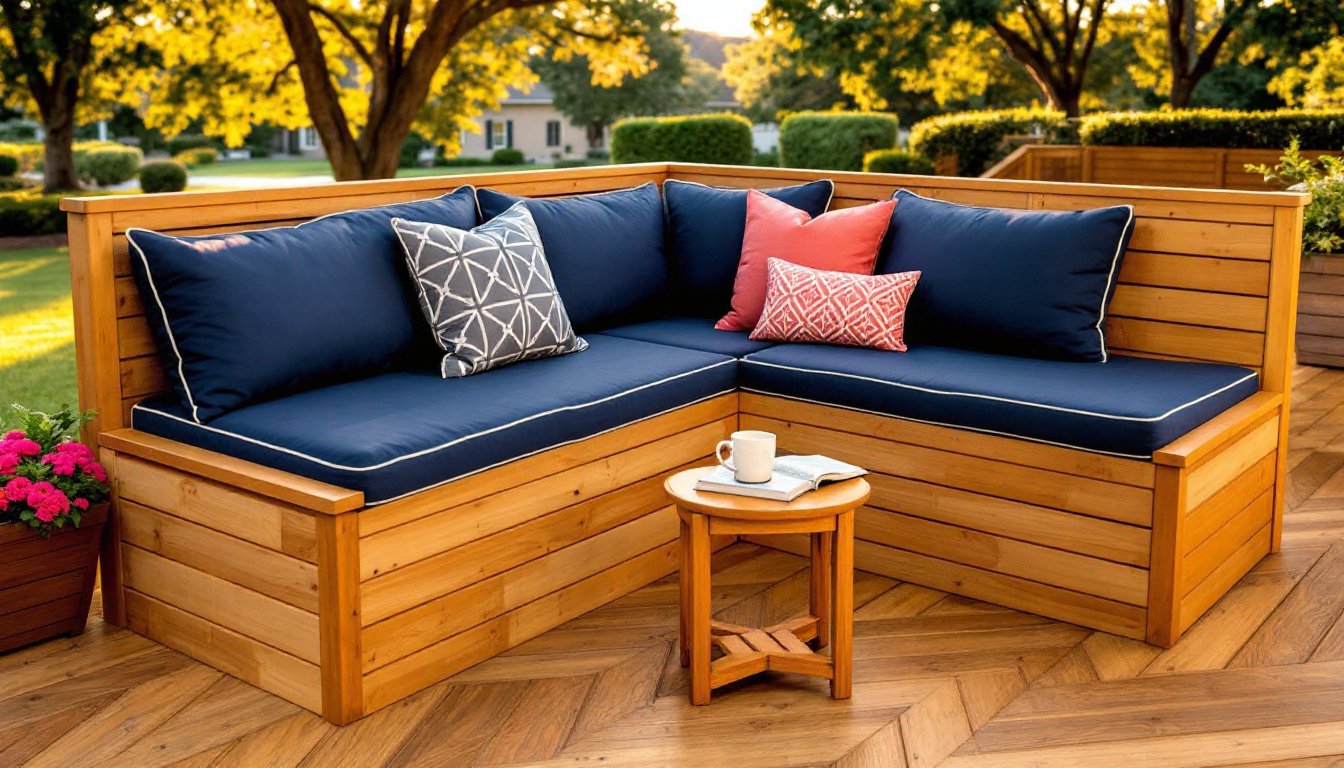
L-shaped benches anchor corners and create natural conversation zones. They’re ideal for decks that wrap around a house corner or where two railings meet at 90 degrees. The corner becomes a focal point rather than dead space.
Framing an L-bench requires solid blocking at the intersection. Run 2×6 or 2×8 joists perpendicular to the deck boards, spaced 16 inches on center, and tie them into the rim joists with joist hangers. The corner joint takes the most stress, so double up blocking and use 3-inch exterior screws or structural bolts.
Seat depth matters here. Standard benches run 15 to 18 inches deep, but corner seating benefits from going slightly deeper, 18 to 20 inches, to accommodate people sitting at angles. If adding a backrest, angle it slightly (about 5 to 10 degrees from vertical) for lumbar support.
Many outdoor design plans incorporate corner benches with built-in planters or lighting. If you’re adding integrated elements, rough in electrical or irrigation lines before framing the bench structure. It’s far easier than retrofitting later.
Storage Bench Solutions for Small Decks
Storage benches combine seating with hidden compartments, perfect for stashing cushions, pool toys, or gardening tools. The lid becomes the seat, and the cavity below keeps clutter out of sight.
Build the box frame from pressure-treated 2×4s or composite framing lumber to resist rot. Size the interior to fit standard storage bins or waterproof deck boxes. A 48-inch-long by 18-inch-deep by 20-inch-tall bench offers roughly 10 cubic feet of storage and seats two adults comfortably.
The lid requires piano hinges or heavy-duty strap hinges rated for outdoor use. Add gas struts (the kind used on truck toolboxes) to prevent the lid from slamming shut, especially important if kids are around. Drill ½-inch drainage holes in the bottom corners to prevent water accumulation from rain or condensation.
Ventilation matters. Without airflow, mildew takes over. Cut 1-inch holes along the lower back panel or use lattice inserts for passive venting. If storing fabric cushions, toss in a few silica gel packets or a rechargeable dehumidifier puck.
For DIY builders, free woodworking plans often include cut lists and assembly diagrams for storage benches. Adjust dimensions to match your deck’s layout and railing style.
Backrest vs. Backless Bench Options
Backrests add comfort but eat up space and materials. Backless benches keep the build simple and the sightlines open, useful when the deck overlooks a view you don’t want to block.
Backless benches work best along low railings or garden beds where the bench isn’t expected to serve as primary lounge seating. They’re faster to build, require less lumber, and won’t obstruct views. Seat width can be narrower, 12 to 15 inches, since there’s no backrest to lean against.
Benches with backrests turn casual perches into comfortable seating for longer gatherings. The backrest should angle between 5 and 15 degrees from vertical. A straight 90-degree back feels stiff. Use 2×4s for vertical slats or 1×6 boards for a solid-panel look. Space slats 3 to 4 inches apart to meet guardrail code if the bench doubles as a railing (gaps must be less than 4 inches to prevent child entrapment).
If the deck railing already exists, you can retrofit a bench by attaching it to the railing posts. This avoids tearing out existing structure. Use lag bolts to secure bench framing directly to posts, and add diagonal bracing underneath for rigidity.
Comfort-wise, backrests win for entertaining and long sit-down meals. Backless benches suit quick coffee stops or secondary seating that doesn’t need to be plush.
Materials and Finishes for Deck Benches
Material choice affects longevity, maintenance, and aesthetics. Deck benches face the same weathering as the deck itself, UV exposure, moisture cycling, and temperature swings.
Pressure-treated pine is the budget standard. It’s widely available, accepts stain and paint, and handles ground contact. Downside: it checks and splinters over time. Seal all cut ends with a wood preservative, and apply a water-repellent stain every two to three years. Avoid using treated lumber for seating surfaces if possible, opt for cedar or composite caps instead.
Cedar and redwood offer natural rot resistance and a cleaner look. They’re pricier but require less chemical treatment. Both species weather to a silver-gray patina unless sealed annually. For seating surfaces, sand smooth and apply a penetrating oil or semi-transparent stain.
Composite decking (brands like Trex, TimberTech, or Azek) resists rot, insects, and fading. It doesn’t splinter, and it won’t need staining. But, composite can get hot in direct sun, dark colors especially. If building benches from composite boards, use hidden fasteners for a clean look and follow manufacturer guidelines for framing support (composites require closer joist spacing than wood).
Tropical hardwoods like ipe or cumaru are incredibly dense and durable but expensive and difficult to work with, pre-drill every screw hole. They’re overkill for most residential benches unless matching an existing hardwood deck.
Finish with exterior-grade polyurethane, solid stain, or marine-grade varnish for added protection. Skip interior latex paints, they peel on outdoor furniture.
Adding Comfort with Cushions and Pillows
Bare wood or composite benches are functional, but cushions turn them into spaces people actually want to use. Outdoor cushions need UV-resistant fabric, quick-dry foam, and weather-resistant construction.
Look for solution-dyed acrylic fabrics like Sunbrella, which resist fading and mildew better than cotton or polyester blends. Cushion fill should be open-cell foam that drains water, not standard upholstery foam that holds moisture and grows mold.
Custom cushions can be pricey, expect $50 to $150 per linear foot depending on fabric and complexity. Off-the-shelf bench cushions in standard sizes (48, 60, or 72 inches) run cheaper. Measure your bench seat depth and length before ordering.
Secure cushions with ties, Velcro strips, or non-slip mats to prevent sliding. Benches with backrests benefit from separate back pillows or lumbar bolsters for support. For small decks, many porch and outdoor living guides suggest mixing solid and patterned fabrics to add visual layers without crowding the space.
Storage matters. Even outdoor-rated cushions last longer if stored during heavy rain or winter months. A nearby storage bench (see earlier section) or a weatherproof deck box keeps them accessible but protected.
For quick seasonal changes, swap pillow covers instead of entire cushions. Zippered covers in different colors or patterns refresh the look without the cost of new cushions.
Conclusion
Deck bench seating shifts outdoor space from generic to purposeful. Whether it’s a simple backless perimeter bench or an L-shaped corner setup with hidden storage, built-in seating eliminates furniture shuffle and maximizes usable square footage. Match materials to your deck’s existing structure, plan for drainage and ventilation, and don’t skip the cushions, they’re the difference between a place to sit and a place people gather.