Table of Contents
ToggleA well-designed deck back porch bridges the gap between indoor comfort and outdoor living. It’s where morning coffee tastes better, where grills get fired up on weekends, and where the weather stays just outside arm’s reach. Whether working with a blank backyard or upgrading an existing platform, homeowners have more material options, layout flexibility, and design styles than ever before. This guide covers practical deck porch ideas that balance function, aesthetics, and buildability, from covered retreats to multi-level layouts and budget-conscious solutions that don’t look cheap.
Key Takeaways
- A deck back porch extends usable outdoor space without the cost and complexity of a room addition, while handling uneven terrain better than traditional patios.
- Covered deck designs using gable, shed, or hip roofs transform the space into a three-season living area that protects furniture from UV damage and extends usability year-round.
- Multi-level deck porch designs create distinct zones with modern touches like floating stairs and cable railing systems that provide unobstructed sightlines and work well on sloped lots.
- Budget-conscious homeowners can save significantly by using pressure-treated lumber, keeping footprints simple and rectangular, and adding covers like pergolas or umbrellas after the initial build.
- Proper furniture selection—weather-resistant seating, appropriately-sized dining sets, and outdoor rugs—transforms a deck porch from a landing pad into a functional outdoor room.
- Strategic lighting with LED deck lights, string lights, and post cap lights makes your deck back porch safe and usable into the evening while adding ambiance for entertaining.
Why a Deck Back Porch Is the Perfect Outdoor Addition
A deck back porch extends usable square footage without the cost and complexity of a room addition. Unlike patios that require grading, compacted gravel, and proper drainage, decks can span uneven terrain, slope away from the house naturally, and integrate with existing door thresholds.
From a resale perspective, outdoor living spaces consistently rank high with buyers. A functional deck porch signals low-maintenance outdoor access and flexible entertaining space. It also creates a defined transition zone that keeps dirt, debris, and wet shoes from tracking indoors.
Structurally, deck porches offer flexibility. They can cantilever over slopes, wrap around corners, or connect to second-story walkouts. Composite decking and pressure-treated lumber both have 20+ year lifespans when properly installed and maintained. Just remember: any deck attached to a dwelling typically requires a permit and must meet local codes for ledger board attachment, joist spacing, and railing height (usually 36 inches minimum for residential).
Classic Covered Deck Porch Designs
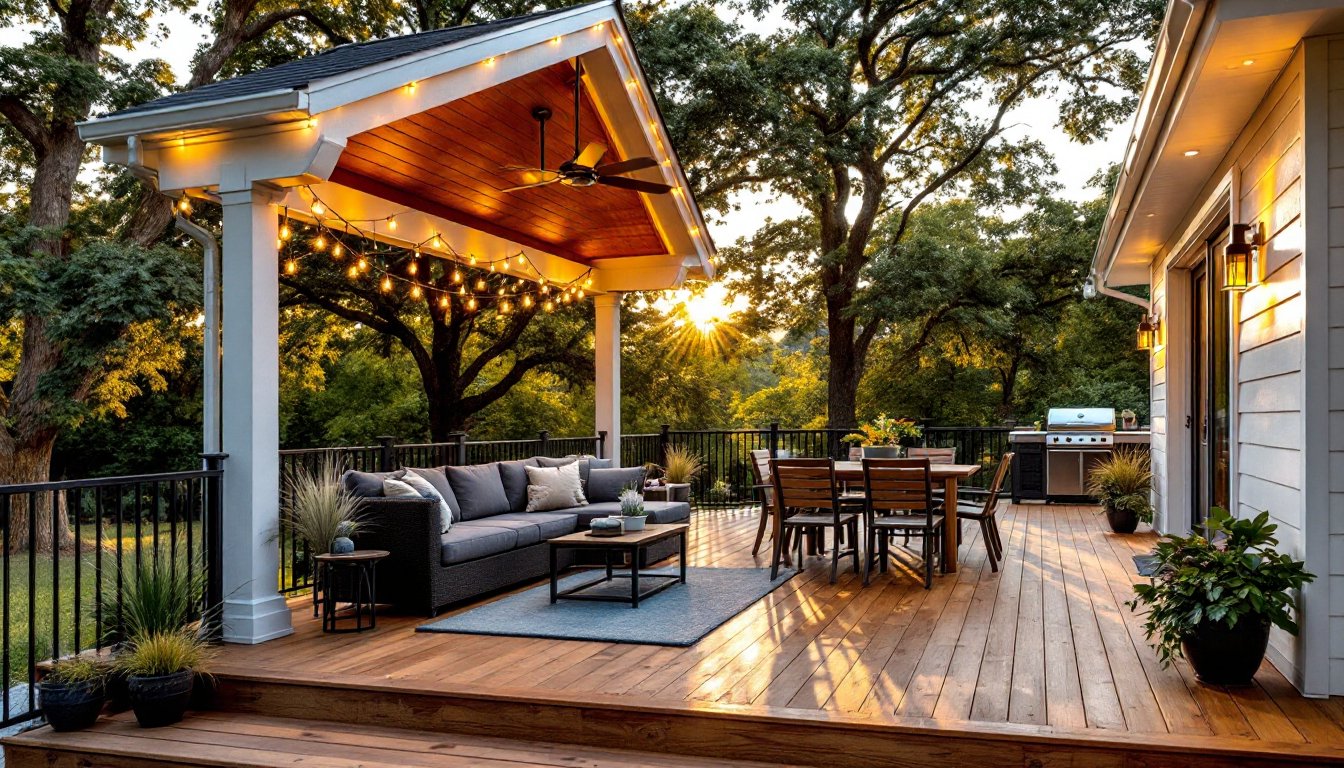
A roof over the deck transforms it from a seasonal platform into a three-season room. Covered designs shelter furniture from UV damage and rain, extend the usable calendar, and create that true “porch” feel.
Gable roof porches offer maximum headroom and a traditional look. They require structural posts (typically 6×6 treated posts set in concrete footings below frost line) and tie into the house roofline or fascia. Gable designs shed water efficiently and provide space for ceiling fans or recessed lighting.
Shed roof porches slope in one direction, usually away from the house. They’re simpler to frame and often the go-to for DIYers with basic carpentry skills. A shed roof integrates cleanly with single-story homes and can often share the existing roof’s drip edge. Pitch matters: aim for at least a 3:12 slope to prevent pooling and ensure shingle warranties stay valid.
Hip roof porches wrap the slope on all sides, offering a finished look from any angle. They’re more complex to frame but visually lighter than gables. For any covered porch design, plan for properly flashed ledger connections and code-compliant post footings. Most jurisdictions require engineered drawings for roof loads, especially in snow country.
Modern Multi-Level Deck Porches
Multi-level decks work beautifully on sloped lots or when creating distinct zones without walls. A lower platform can serve as a dining area, while an upper level connects directly to the kitchen door. Steps between levels become architectural features rather than afterthoughts.
When planning elevations, think in 7-inch rise increments, close to standard stair riser height and easier to navigate than arbitrary drops. Each level needs its own joist system and posts. The IRC requires a 40 psf live load rating for residential decks, meaning your joist sizing and spacing must support that weight.
Modern designs often incorporate floating stairs (open risers, metal stringers) and cable railing systems for unobstructed sightlines. Cable rail meets code when horizontal cables are spaced so a 4-inch sphere cannot pass through, critical for homes with young children.
Material choices matter here. Composite decking creates clean lines and comes in contemporary grays, blacks, and browns that pair well with metal accents. Pressure-treated framing stays hidden below. For a high-contrast look, some builders use Ipe or Cumaru hardwood on the upper level and composite on the lower, just account for different expansion rates and fastener requirements.
Budget-Friendly Deck Back Porch Ideas
Deck projects don’t have to drain savings accounts. Smart planning and material selection can deliver a solid porch without premium price tags.
Stick with pressure-treated lumber for both framing and decking. Southern yellow pine (PT) costs roughly half what composite does per square foot and, when maintained with an annual deck stain or sealer, holds up for decades. The tradeoff: more maintenance and eventual splintering.
Keep the footprint simple. Rectangles cost less than octagons. Straight runs require fewer cuts, less waste, and faster installation. A 12×16-foot deck provides 192 square feet, plenty of room for a table, grill, and seating.
Skip the roof initially. A large cantilever umbrella or retractable awning offers shade and can be added after the deck is complete. If a roof is non-negotiable, consider a DIY-friendly pergola-style structure with open slats instead of a fully shingled cover. It provides partial shade and can support climbing vines for a greener canopy.
Use concrete deck blocks for low-to-grade decks (under 30 inches). Blocks eliminate the need for digging footings and pouring concrete, saving labor and rental costs for an auger. Just ensure the ground is level and compacted, and check local codes, some jurisdictions don’t allow floating decks for attached structures.
Buy materials in bulk or off-season. Lumber yards often discount decking and framing lumber in late fall and winter when demand drops. A well-planned materials list prevents return trips and keeps the project on budget.
Furniture and Decor Ideas for Your Deck Porch
Furniture makes the deck feel like an outdoor room rather than a landing pad. Choose pieces designed for weather exposure: powder-coated aluminum frames, all-weather wicker, or sustainably harvested teak.
Sectionals and modular seating work well on larger decks. They’re configurable for different group sizes and often include storage ottomans for cushions and outdoor throws. Look for solution-dyed acrylic fabrics, they resist fading and mildew better than untreated cotton blends.
Dining sets should be sized for the space. A 60-inch round table seats six comfortably but needs at least 10 feet of clearance in all directions for chairs to pull out. Rectangular tables fit narrow decks better and can be pushed against a railing when not in use.
Outdoor rugs define zones and add color. Polypropylene rugs dry quickly and resist mold. Secure edges with rug tape or heavy furniture to prevent tripping hazards and wind lift.
Planters and greenery soften hard edges. Built-in planter boxes can integrate into railing posts or deck corners. Use composite or cedar for planter construction, PT lumber leaches chemicals that can harm some plants. Ensure adequate drainage by drilling 1/2-inch weep holes every 6 inches along the bottom.
Privacy screens add enclosure without full walls. Lattice panels, horizontal slat screens, or even outdoor curtains on a cable track create separation from neighbors. For a natural look, train climbing jasmine or clematis on a trellis mounted to railing posts.
Lighting and Ambiance Enhancements
Lighting extends deck porch usability into the evening and adds a layer of safety on stairs and transitions. Plan for a mix of task, ambient, and accent lighting.
Recessed deck lights mount flush with the decking surface or into riser faces. LED versions draw minimal power and stay cool to the touch. Space them every 3–4 feet along pathways and step edges. Most low-voltage systems run on a transformer stepped down to 12V, making DIY installation safer than 120V line voltage.
Post cap lights sit atop railing posts and provide gentle ambient glow. Solar-powered versions eliminate wiring but need direct sun exposure to charge effectively. Hardwired LED caps offer consistent brightness and integrate into a central switch or timer.
String lights are the fastest way to add ambiance. Commercial-grade cafe lights with Edison-style bulbs hold up better than big-box festoon sets. Hang them in a zigzag pattern or along the perimeter, securing every 2–3 feet with screw-in cup hooks rated for outdoor use.
Overhead fans with integrated lights work on covered porches and improve air circulation on humid nights. Confirm the fan is rated for damp or wet locations depending on exposure. Most ceiling fans need at least 7 feet of clearance from the deck surface to the blade.
Smart controls let homeowners dim, schedule, or color-shift lights from a phone. Low-voltage systems pair easily with smart transformers, and weatherproof smart plugs work for string lights and standalone fixtures. Just keep the control box and transformer in a dry, accessible location for maintenance.
Conclusion
A deck back porch blends structure and style, offering outdoor living space that works for daily routines and weekend entertaining. Whether building a simple platform, a covered retreat, or a multi-level showcase, attention to materials, code compliance, and layout pays off in longevity and usability. Start with a clear plan, secure necessary permits, and don’t skip the prep work. The result is an outdoor space that feels like a natural extension of the home, and actually gets used.