Table of Contents
ToggleMost homeowners spend weeks agonizing over wall colors, then grab whatever white paint is on sale for the ceiling. It’s a missed opportunity. The ceiling covers the same square footage as the floor, catches light differently throughout the day, and has the power to make a room feel taller, cozier, or more cohesive. Whether renovating a single room or tackling a whole-house refresh, the ceiling deserves more than an afterthought. This guide walks through practical ceiling paint color ideas, from safe classics to bold statements, and explains how to choose and apply them without regret.
Key Takeaways
- Ceiling paint color ideas can transform how a room feels by affecting perceived height, light reflection, and color temperature—making this often-overlooked surface just as important as wall color.
- Classic white and off-white ceilings remain safe choices that brighten rooms and pair with any wall color, while cool whites work best in modern spaces and warm whites complement wood trim and vintage interiors.
- Bold ceiling paint colors like navy, charcoal, and vibrant accents create drama and intimacy in high-ceilinged rooms, though they require meticulous prep work to avoid showing drips and imperfections.
- Soft pastels and monochromatic ceiling paint options add subtle character to bedrooms and bathrooms while maintaining the illusion of space, especially effective in rooms with lower ceilings.
- Proper preparation, the right tools (quality roller with extension pole and ceiling-specific paint), and two coats are essential for professional-looking results that avoid lap marks and uneven coverage.
- Sample your ceiling color in natural and artificial light before committing, as ceiling colors appear different from below than on vertical swatches and react uniquely to your room’s specific lighting conditions.
Why Your Ceiling Color Matters More Than You Think
A ceiling painted the wrong color can make a room feel cramped, disjointed, or just off, even if every other design decision is spot-on. The ceiling influences perceived room height, light reflection, and color temperature. A dark ceiling lowers visual height, making a space feel intimate or cave-like depending on execution. A lighter ceiling reflects natural and artificial light back into the room, brightening walls and reducing the need for extra fixtures.
Ceiling paint also affects how wall colors read. A pure white ceiling can make warm wall tones look muddy by contrast, while a cream or tinted ceiling unifies the palette. In rooms with architectural details, coffers, beams, or tray ceilings, color choices highlight or downplay these features. Ignoring the ceiling means ignoring roughly 20% of the room’s visible surface area.
Beyond aesthetics, ceiling paint differs from wall paint in formulation. Most ceiling paints have a flat or matte finish to minimize glare and hide imperfections like drywall seams or popcorn texture. They’re also formulated to reduce spatter and have better hiding power in fewer coats. Using wall paint on a ceiling usually means more coats, more drips, and a finish that shows every flaw under angled light.
Classic White and Off-White Ceiling Colors
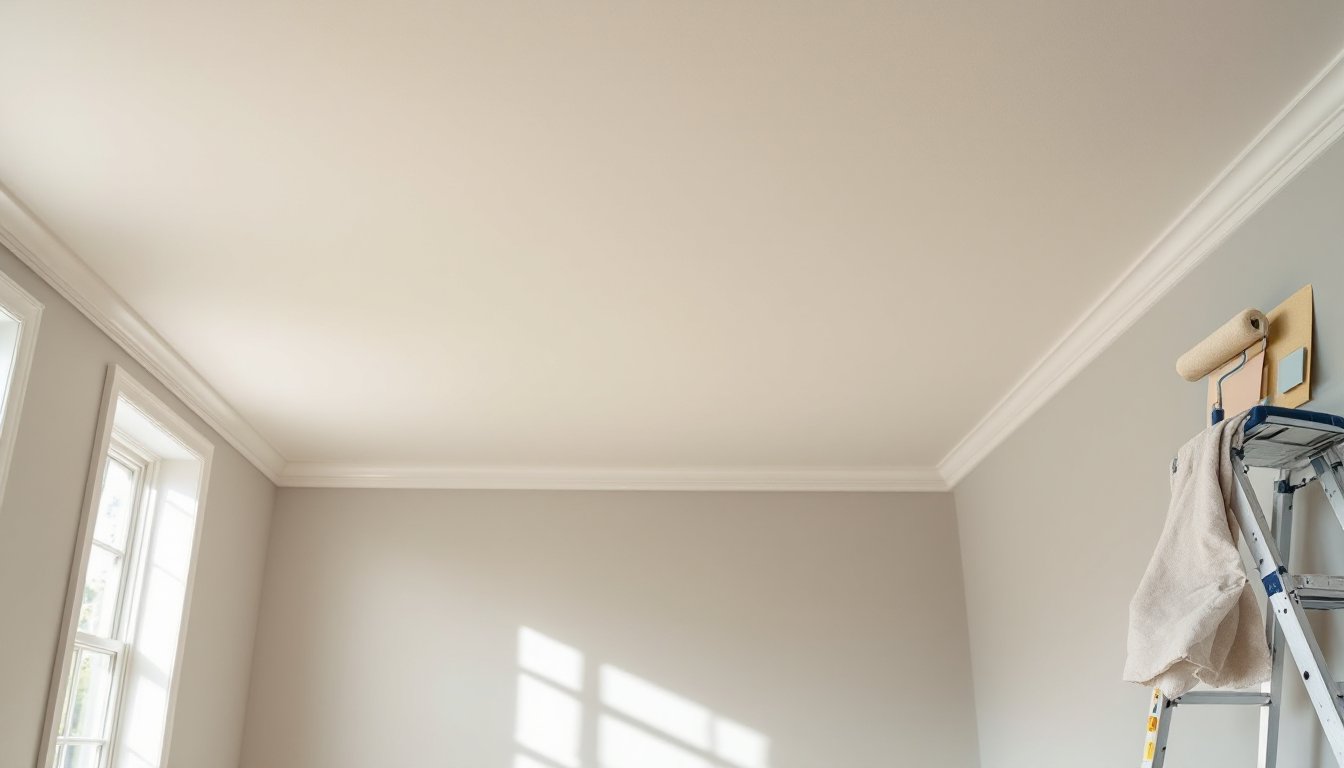
Bright white remains the default for good reason. It reflects the most light, works with any wall color, and keeps rooms feeling open. For new construction or rental properties, a clean white ceiling is a safe, neutral choice that appeals to the widest audience. Look for paints labeled “ceiling white” or “extra white” with an LRV (Light Reflectance Value) above 85. These maximize brightness without the stark, clinical feel of pure titanium white.
Off-whites and warm whites soften the harshness of bright white and work especially well in rooms with warm wall colors, wood trim, or limited natural light. Shades with names like “Swiss Coffee,” “Alabaster,” or “Linen” have subtle yellow or beige undertones that prevent the ceiling from feeling cold. In homes with original plaster or vintage character, an off-white ceiling respects the period while still feeling fresh.
Cool whites lean toward blue or gray undertones and pair well with cool-toned walls, grays, blues, greens. They’re popular in modern or minimalist interiors where a crisp, clean look is the goal. Be cautious in rooms with warm lighting or wood accents, as cool whites can clash and make the space feel sterile. Test samples in different lighting conditions before committing to a gallon.
Bold and Dramatic Ceiling Paint Ideas
Dark ceilings, navy, charcoal, black, deep green, create drama and intimacy. They work best in rooms with high ceilings (9 feet or taller) or spaces where a cozy, enveloping feel is desirable: libraries, dining rooms, home theaters, or primary bedrooms. A dark ceiling visually lowers the plane, making a cavernous room feel more human-scaled. Pair it with lighter walls to maintain balance, or go full moody and paint walls a similar depth for a cocoon effect.
In rooms with exposed beams or coffered ceilings, painting the recessed panels a dark color while keeping beams lighter adds architectural interest without overwhelming the space. Use a low-sheen finish (matte or flat) to avoid a glossy, painted-on look. Prep work is critical, dark colors show every drip, lap mark, and missed spot. Plan for two coats minimum, and use a high-quality roller with a 1/2-inch nap.
Vibrant accent ceilings, coral, mustard, robin’s egg blue, turn the ceiling into the room’s focal point. This approach works in powder rooms, kids’ bedrooms, or small spaces where a playful touch is welcome. Keep walls neutral to let the ceiling shine. Homeowners who enjoy frequent paint color updates often use bold ceiling colors as a low-commitment way to experiment with trend-driven hues.
Soft and Subtle Ceiling Color Options
Pale pastels, blush pink, soft gray-blue, mint, lavender, add a whisper of color without overwhelming a room. These work beautifully in nurseries, bedrooms, or bathrooms where a serene, spa-like feel is the goal. Pastels reflect nearly as much light as white but introduce subtle warmth or coolness that ties into the overall palette.
For a cohesive look, some designers paint the ceiling the same color as the walls but several shades lighter. This monochromatic approach blurs boundaries and makes small rooms feel larger. It’s particularly effective in rooms with low ceilings (under 8 feet), where a distinct ceiling color can emphasize the lack of height.
Greige and taupe ceilings bridge warm and cool tones, making them versatile in open-concept homes where the ceiling spans multiple spaces. They pair well with both warm woods and cool metals, and they hide minor imperfections better than stark white. Many paint color guides recommend greige as a neutral that feels more modern than beige but warmer than gray.
Matching Your Ceiling Color to Room Style and Function
In traditional or historic homes, off-white or cream ceilings respect period details like crown molding, medallions, or picture rails. If the home has original plaster, match the ceiling to the existing plaster color rather than introducing a stark modern white. In rooms with dark wood trim, a warm white ceiling prevents harsh contrast.
Modern and minimalist spaces favor bright white or cool gray ceilings that complement clean lines, open layouts, and industrial materials like concrete or steel. In loft-style spaces with exposed ductwork or structural elements, painting the ceiling and mechanicals the same dark color (usually black or charcoal) creates a unified, intentional look.
Coastal or cottage styles benefit from soft blues, pale aquas, or sky-inspired tones on the ceiling, especially in porches, sunrooms, or bathrooms. This mimics the look of traditional haint blue porch ceilings, a Southern tradition believed to repel insects and spirits. It also visually extends the sky indoors.
For kids’ rooms and playrooms, consider a ceiling color that supports the theme without being a headache to repaint later. A soft sky blue works for a cloud mural. A pale yellow feels sunny without being overstimulating. Avoid high-saturation primaries unless you’re committed to the look for years.
In home offices and studios, ceiling color affects focus and mood. A white or light neutral ceiling maximizes task lighting efficiency. A soft gray or blue-gray can reduce glare on screens and create a calmer environment. Avoid dark ceilings in workspaces unless ambient lighting is excellent.
Tips for Choosing and Applying Ceiling Paint
Sample first. Paint a 2×2-foot square on the ceiling and live with it for a few days. Ceiling color looks different from below than it does on a wall swatch. Observe it in morning light, midday sun, and evening lamplight.
Prep matters. Move furniture out or to the center and cover with drop cloths. Use painter’s tape along crown molding or the wall-ceiling joint. Patch any cracks or holes with joint compound, sand smooth, and prime stained or patched areas. Skipping prep is why most DIY ceiling jobs look amateurish.
Use the right tools. A quality roller frame with an extension pole saves your neck and shoulders. Use a 9-inch or 12-inch roller cover with a 1/2-inch nap for smooth ceilings or 3/4-inch for textured surfaces. A 2-inch angled brush is essential for cutting in along edges. An edging pad works but requires practice.
Apply two coats. Even with high-quality paint, one coat rarely delivers even coverage, especially over an existing color. Let the first coat dry fully (usually 2-4 hours) before applying the second. Roll in overlapping “W” or “N” patterns to avoid lap marks.
Safety first. Wear safety goggles to protect eyes from drips. Use a sturdy stepladder or scaffold plank, never stand on furniture. Open windows for ventilation, especially with oil-based primers or low-VOC paints that still off-gas.
For heavily textured ceilings (popcorn, knockdown), use a thick-nap roller and expect higher paint consumption, up to 400 square feet per gallon instead of the typical 350-400. If the texture is dated or damaged, consider having it scraped and the ceiling re-skimmed before painting. This is messy work that often requires a pro, especially if asbestos testing is needed (common in homes built before 1980).
Many DIY renovation enthusiasts recommend painting the ceiling before tackling walls, especially in full-room makeovers. This way, any ceiling drips or overspray onto walls gets covered during the wall paint phase.
Conclusion
The ceiling is the room’s sixth wall, and treating it as such opens up dozens of design possibilities. A fresh coat in the right color, whether classic white, a soft pastel, or a bold accent, can change how a room feels without moving a single piece of furniture. With proper prep, the right tools, and a little patience, a ceiling paint project is well within reach for most DIYers. Start with one room, test samples, and don’t be afraid to go beyond builder-grade white.