Table of Contents
ToggleA boho chic bedroom doesn’t require an interior designer or a complete renovation, just a willingness to layer textures, embrace imperfection, and mix patterns with confidence. This style thrives on personal expression, blending vintage finds with global textiles and natural materials. Whether someone’s working with a compact rental or a spacious primary suite, the boho approach adapts to any floor plan and budget. The key is understanding which elements create that effortlessly eclectic vibe without turning the space into visual chaos.
Key Takeaways
- A boho chic bedroom is built on personal expression and layered textures rather than strict design rules, making it adaptable to any space or budget.
- Start with warm neutral walls (soft whites, beiges, or terracotta) as an anchor, then layer in jewel tones and mismatched patterns to create visual interest without chaos.
- Layering textiles—piling pillows, throws, and rugs in varying patterns while keeping the color palette cohesive—is essential to achieving that cozy, collected-over-time aesthetic.
- Boho chic furniture should feel organic and worn-in; mix mismatched pieces from thrift stores and estate sales, like a wicker nightstand paired with a vintage stool, rather than buying matching sets.
- Plants, warm lighting (string lights, salt lamps, or dimmer switches), and natural materials like wood, cotton, and macramé complete the boho vibe without requiring permanent renovations.
- DIY projects like macramé wall hangings, dip-dyed curtains, and floating shelves from reclaimed wood let renters customize their space affordably while adding authentic character.
What Defines the Boho Chic Bedroom Style?
Boho chic, short for bohemian, pulls from multiple design traditions rather than following a single rulebook. It mixes Moroccan textiles, mid-century furniture, macramé wall hangings, and houseplants into one cohesive look. The style originated from artists and travelers who collected pieces from different cultures, so authenticity matters more than matching sets.
Unlike minimalist or farmhouse aesthetics, boho celebrates abundance. Expect layered rugs, stacked pillows, and walls adorned with woven baskets or vintage mirrors. But there’s structure beneath the eclecticism: a neutral base (often warm whites, tans, or terracotta) anchors bolder accents like jewel-toned throws or patterned curtains.
This isn’t about buying everything at once. The best boho bedrooms evolve over time as someone finds a hand-carved wooden bench at an estate sale or inherits a grandmother’s quilt. DIYers can tackle projects like refinishing thrifted nightstands or creating their own wall art, which keeps costs manageable while adding personal character.
Essential Color Palettes and Textures for Bohemian Bedrooms
The foundation of a boho bedroom starts with earthy neutrals: warm whites (like Benjamin Moore’s Swiss Coffee), sandy beiges, soft terracottas, and clay tones. These create a calm backdrop that won’t compete with patterned textiles or colorful art.
From there, add depth with jewel tones or muted earth shades. Burnt orange, mustard yellow, deep teal, rust red, and olive green all work. The trick is varying the intensity, pair a bold rust throw with softer cream pillows rather than matching everything to the same saturation level.
Texture matters as much as color. Smooth painted walls benefit from contrast: woven wall hangings, jute rugs, linen curtains, velvet cushions, and raw wood furniture. Each material catches light differently, which prevents the room from feeling flat. Many designers use layered decor techniques to build visual interest without overwhelming the space.
Avoid pure white or stark gray, they read too modern for boho. If the walls are rental-white and repainting isn’t an option, warm them up with amber-toned lighting and plenty of textiles in ochre, sienna, or camel shades.
Layered Textiles and Fabrics That Create Cozy Vibes
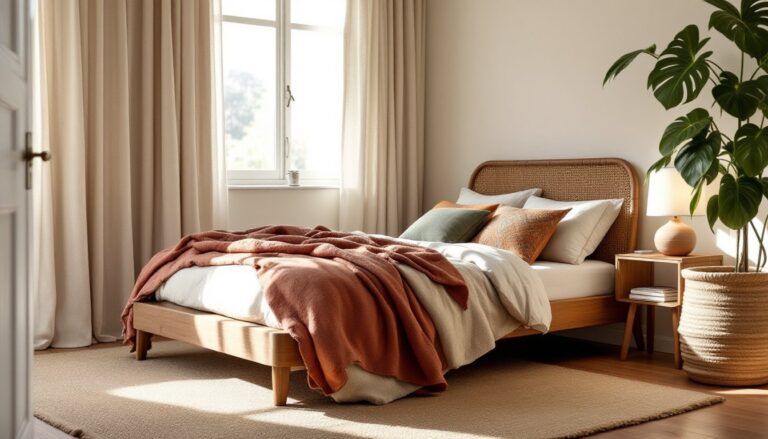
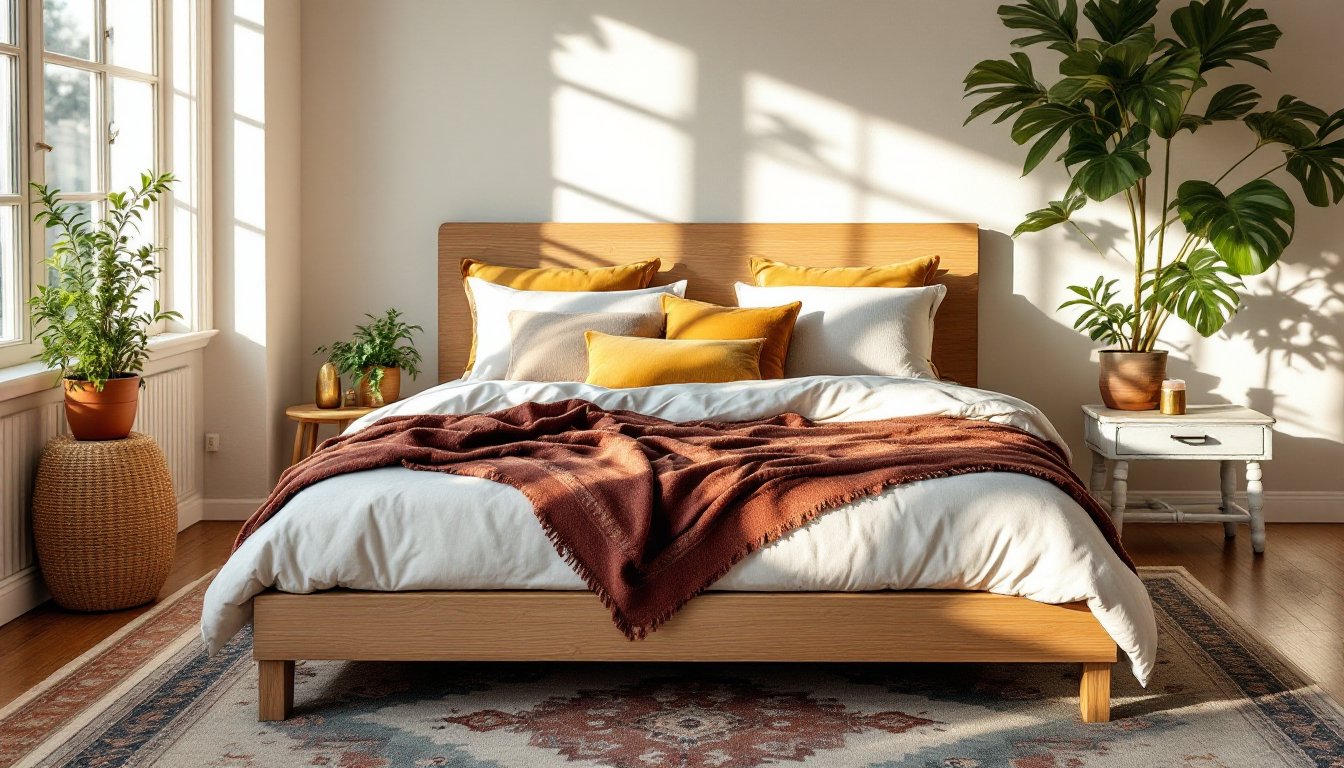
Layering textiles is non-negotiable in boho design. Start with the bed: a neutral duvet or quilt as the base, then add a patterned throw blanket (think Aztec, ikat, or block-print designs) folded at the foot. Pile on four to six pillows in varying sizes, euro shams in back, standard pillows in front, and a couple of smaller accent pillows with tassels or embroidery.
Don’t match pillow patterns exactly. Mix a geometric print with a floral and a solid texture like chunky knit or velvet. The key is keeping the color palette cohesive even when patterns differ.
Rugs get the same treatment. In larger bedrooms, layer a smaller patterned rug (5’x7′ or 6’x9′ vintage Persian or kilim) over a bigger natural fiber rug like jute or sisal. This adds warmth underfoot and defines the sleeping zone. In smaller spaces, one substantial rug (8’x10′) in a bold pattern works better than two competing layers.
Curtains should feel relaxed, linen or lightweight cotton in natural tones, hung from wooden or brass rods. Skip the crisp hospital corners and ironed pleats. Let fabric drape naturally, even if it puddles slightly on the floor. That unstructured look is part of the charm.
For renters or those avoiding commitment, all these textiles swap out easily. Seasonal changes, swapping heavy velvet for airy cotton gauze, keep the room feeling fresh without structural work.
Furniture and Decor Pieces That Capture Boho Charm
Boho furniture leans toward low-profile beds and natural materials. Platform beds in light wood (oak, ash, or rattan) work well, as do metal bed frames with curved details. Skip the bulky upholstered headboards, opt for a carved wooden headboard, a DIY macramé hanging, or even a large tapestry mounted on a curtain rod behind the bed.
Nightstands don’t need to match. Pair a wicker side table on one side with a painted vintage stool on the other. Mismatched furniture reinforces the collected-over-time aesthetic. Look for pieces with visible wood grain, woven details, or hand-carved elements.
Seating adds function and style: a rattan chair with a sheepskin throw, a wooden bench at the foot of the bed, or floor cushions for casual reading nooks. Avoid anything too sleek or modern, boho furniture should feel a bit worn-in, even if it’s new.
Decor fills the gaps. Hang woven baskets in varying sizes as wall art (they’re lightweight and mount with a single nail). Display pottery, brass candleholders, or ceramic vases on floating shelves. Vintage mirrors with ornate frames bounce light and make small rooms feel larger.
Thrift stores, estate sales, and online marketplaces often yield better boho finds than big-box retailers. Someone can refinish a solid wood dresser for less than buying particleboard furniture that mimics the style. Sand it down, apply a natural oil finish or chalk paint, and swap the hardware for brass or leather pulls.
Plants, Lighting, and Natural Elements to Complete the Look
Plants are essential. They soften hard edges, improve air quality, and bring life into the space. Snake plants, pothos, and rubber trees thrive indoors with minimal fuss, important for DIYers who don’t want high-maintenance greenery.
Group plants at varying heights: a tall fiddle-leaf fig in the corner, medium-sized plants on nightstands or dressers, and trailing pothos on a high shelf or wall-mounted planter. Use baskets, ceramic pots, or terracotta planters, avoid plastic if possible. Macramé plant hangers near windows add vertical interest without taking floor space.
Lighting sets the mood. Overhead fixtures should feel warm, not clinical. Swap harsh white bulbs for warm white LEDs (2700K-3000K). Pendant lights made of woven rattan, bamboo, or brass suit the style better than modern chrome fixtures.
Add layered ambient lighting: string lights draped along a headboard or around a mirror, a Himalayan salt lamp on a nightstand, or candles in brass or ceramic holders. Dimmer switches (easy to install, just turn off the breaker, disconnect the old switch, connect the new one following the manufacturer’s wiring diagram, and restore power) let someone adjust brightness for reading versus relaxing.
Natural elements extend beyond plants. Driftwood mounted as a curtain rod, a bowl of smooth river stones, or a woven seagrass basket for laundry all reinforce the organic feel. Projects inspired by nature-focused design trends often emphasize these raw, unfinished materials.
Avoid synthetic finishes where possible. Choose wood over laminate, cotton over polyester, and metal over plastic. These materials age better and feel more authentic, key to pulling off boho without it looking like a theme costume.
DIY Boho Bedroom Projects You Can Tackle This Weekend
Macramé Wall Hanging
Macramé takes patience but no special skills. Buy 3mm or 5mm cotton cord and a wooden dowel (a 1-inch diameter, 24-30 inch length works for most wall spaces). Learn four basic knots, square knot, half-hitch, spiral knot, and lark’s head, from free online tutorials. Cut 20-30 strands of cord (each about 8-10 feet long), attach them to the dowel with lark’s head knots, and work downward in your chosen pattern. Trim the bottom into a V-shape or leave it shaggy. Total cost: $15-$30. Time: 3-5 hours.
Floating Shelves from Reclaimed Wood
Find a solid wood plank (1×6 or 1×8, at least ¾ inch thick) at a salvage yard or cut down a longer board. Sand it smooth (120-grit then 220-grit), apply a natural oil finish or stain, and let it cure for 24 hours. Mount with floating shelf brackets rated for the shelf’s length (typically 8-inch brackets for up to 24-inch shelves, 10-inch for longer spans). Locate studs with a stud finder, mark bracket positions with a level, drill pilot holes, and secure with 3-inch wood screws into the studs. Slide the shelf over the brackets. Cost: $10-$25 per shelf. Time: 2-3 hours including dry time.
Dip-Dyed Curtains
Buy plain cotton or linen curtains. Mix fabric dye (like Rit) in a large bucket following package instructions, usually one bottle per 5-gallon bucket of hot water. Dip the bottom third of each curtain panel into the dye, hold for 5-10 minutes (longer for deeper color), then gradually lift to create an ombre effect. Rinse in cold water until it runs clear, wash separately, and hang to dry. This adds custom color without sewing. Cost: $15-$30. Time: 2 hours plus drying.
Painted Terra Cotta Pots
Grab a few plain terra cotta pots (4-inch to 10-inch sizes). Clean them with soapy water and let dry. Use acrylic craft paint or chalk paint to add geometric patterns, stripes, or abstract designs. Seal with a matte acrylic sealer if the pots will hold real plants (moisture can cause unsealed paint to peel). Group them on a shelf or windowsill. Cost: $10-$20 for multiple pots. Time: 1-2 hours.
These projects let someone customize their space without permanent changes, ideal for renters. Many of these ideas draw from accessible home styling guides that prioritize creativity over budget.
Conclusion
Creating a boho chic bedroom doesn’t demand a full remodel or a designer budget. It rewards patience, thrift-store persistence, and a willingness to mix textures and patterns with intention. Start with a neutral base, layer in textiles and natural materials, then personalize with DIY projects that reflect individual style. The result is a bedroom that feels collected, comfortable, and entirely unique.