Table of Contents
ToggleBlack flooring isn’t just a trend, it’s a statement. Whether you’re aiming for dramatic contrast, modern minimalism, or timeless elegance, black floors anchor a room unlike any other color. They hide dirt and scratches better than lighter options, work with almost any design style, and add depth that makes spaces feel intentional. But black flooring comes with trade-offs: it shows dust and requires careful coordination with walls, furniture, and lighting. This guide breaks down the best black flooring materials, where to use them, and how to keep them looking sharp without constant upkeep.
Key Takeaways
- Black flooring creates dramatic visual contrast and works across modern, traditional, and Scandinavian design styles, but requires careful coordination with lighting, walls, and furniture to avoid a cave-like atmosphere.
- Black flooring materials include solid hardwood ($8–$15/sq ft), engineered wood, porcelain tile, luxury vinyl plank, and laminate ($1–$4/sq ft), each with distinct durability, waterproofing, and maintenance requirements.
- Black flooring hides scratches and wear better than lighter options but shows dust, pet hair, and water spots, requiring daily sweeping, regular maintenance with appropriate cleaners, and strategic use of doormats.
- Wide planks (5–7 inches) in black hardwood look more elegant than narrow strips, large-format tiles minimize grout lines, and matte or honed finishes provide safer traction than polished surfaces.
- In kitchens and bathrooms, pair black flooring with light cabinetry, white walls, and ample lighting to prevent the space from feeling dark; in living rooms, layer light area rugs and warm wood accents to break up darkness.
- Black flooring absorbs heat more than lighter colors, making engineered wood and luxury vinyl better choices than solid hardwood for rooms with direct sunlight or radiant heating systems.
Why Black Flooring Is a Bold Design Choice
Black floors create instant visual weight. They ground a room and make everything above them pop, white trim, colored walls, natural wood furniture. This contrast is why designers love them in open-concept homes where you need to define zones without adding walls.
From a practical standpoint, black flooring hides wear better than medium-toned options. Scratches blend into dark surfaces, and dirt doesn’t show as obviously as it does on beige or gray floors. But you’ll see every dust bunny and pet hair, so plan for regular sweeping or robot vacuums.
Black works across styles. In modern spaces, it pairs with concrete, metal, and glass. In traditional homes, it anchors ornate moldings and antique rugs. Scandinavian interiors use black floors to offset all-white walls and light wood accents. The key is balance, too much black feels cave-like, so consider ceiling height, natural light, and wall color before committing.
One caution: black absorbs heat. In rooms with direct sunlight or radiant floor heating, surface temperatures can climb. Engineered products handle this better than solid wood, which can expand or cup under thermal stress.
Black Hardwood and Engineered Wood Flooring
Solid hardwood in black typically starts as oak, maple, or walnut, then gets stained. Ebony stains penetrate deep and require multiple coats plus a durable topcoat, polyurethane or hardwax oil. Expect to pay $8–$15 per square foot for materials, plus installation. Solid wood needs acclimation (let it sit in the room for 48–72 hours before install) and a stable environment, humidity swings cause cupping or gapping.
Engineered wood layers a hardwood veneer over plywood or HDF, making it more dimensionally stable. It works over concrete slabs, in basements, and with radiant heat. Popular options include 3/8-inch or 1/2-inch thick planks in wire-brushed or hand-scraped textures that hide wear. Many manufacturers offer pre-finished black stains, saving you the dust and fumes of on-site finishing.
For a matte black look, skip high-gloss polyurethane and go with satin or matte finishes. Gloss amplifies every footprint and scratch. If you’re refinishing existing hardwood, hire a pro, black stain shows sanding marks and uneven application more than lighter tones.
Installation tip: Black hardwood looks best in wide planks (5–7 inches). Narrow strips can feel busy and dated. Run planks parallel to the longest wall or toward the main light source to elongate the space.
Black Tile Flooring for High-Impact Spaces
Porcelain and ceramic tile in black are workhorses for bathrooms, kitchens, and entryways. Porcelain is denser and more water-resistant, crucial for wet areas. Look for tiles rated for floor use (not wall-only), with a PEI rating of 4 or 5 for high-traffic zones.
Large-format tiles (12×24-inch or 24×24-inch) minimize grout lines and make small rooms feel bigger. Grout color matters, black or charcoal grout creates a seamless look, while white grout adds grid contrast (but shows grime faster). Seal grout lines with a penetrating sealer after installation, then reapply annually.
For texture, matte or honed finishes are safer underfoot than polished tile, which gets slippery when wet. Textured surfaces also hide water spots. If you want the look of polished black floors without the slip hazard, consider porcelain with a semi-gloss finish.
Hexagon, subway, or geometric tiles in black work for accent areas, powder rooms, mudroom floors, or kitchen backsplashes extended to the floor. Install over cement backer board (not just drywall) in wet areas to prevent tile cracking. Use a flexible thin-set mortar for large tiles to accommodate slight substrate movement.
One install quirk: black tile shows lippage (uneven edges) more than lighter colors. A laser level and careful troweling are non-negotiable.
Black Vinyl and Laminate Flooring Options
Luxury vinyl plank (LVP) and luxury vinyl tile (LVT) nail the black wood or tile look at $2–$7 per square foot. They’re 100% waterproof (not just water-resistant), so they work in basements, laundry rooms, and bathrooms without the worry of hardwood warping. Look for WPC (wood-plastic composite) or SPC (stone-plastic composite) cores, they’re rigid, dent-resistant, and compatible with radiant heat.
Many LVP lines mimic hand-scraped or wire-brushed hardwood in ebony or charcoal. The embossing matches the printed grain, so it feels textured underfoot. Install with a floating click-lock system over existing subfloors (no glue or nails), and you can walk on it immediately. Add foam underlayment for sound dampening if you’re installing over concrete.
Laminate flooring is cheaper ($1–$4 per square foot) but not waterproof, moisture will swell the fiberboard core. It works in bedrooms, living rooms, and hallways. Black laminate often has a low-gloss AC3 or AC4 wear rating, meaning it resists scratches and fading. It’s thinner than LVP, so transitions to adjoining rooms may need reducer strips or T-molding.
Both vinyl and laminate show dust and pet hair aggressively. A microfiber dry mop or Swiffer becomes your best friend. Avoid steam mops on laminate, the moisture can seep into seams and cause buckling.
Styling Tips for Black Floors in Different Rooms
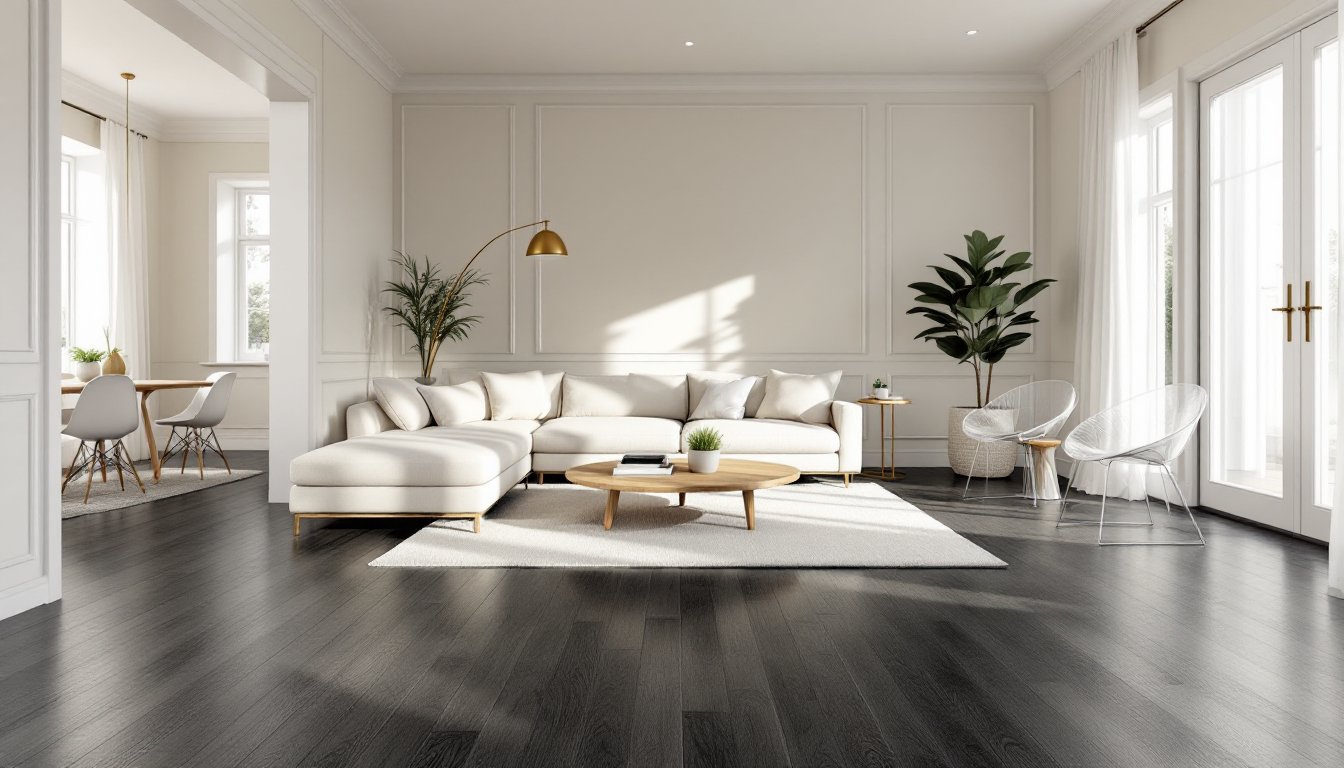
Living rooms: Pair black floors with light-colored area rugs to break up the darkness and define seating zones. A cream or gray sectional pops against black, and wood or brass accents add warmth. If your walls are dark, keep the ceiling white to prevent a closed-in feel.
Kitchens: Black flooring (especially tile or vinyl) hides spills but shows crumbs. Balance it with white or light gray cabinetry, stainless appliances, and under-cabinet lighting to keep the space bright. Open shelving in natural wood softens the contrast. Avoid all-black kitchens unless you have massive windows or skylights, natural light is essential.
Bathrooms: Black tile (especially small hexagons or penny rounds) creates spa-like drama. Add white subway tile walls, matte black fixtures, and plenty of task lighting. Use a squeegee after showers to prevent water spots on glossy black tile. In powder rooms, you can go bold with patterned black tile and moody wall colors.
Bedrooms: Black hardwood or LVP in bedrooms works if you have high ceilings and large windows. Layer with textured rugs, linen bedding, and warm wood furniture. Skip black floors in kids’ rooms, they show every toy and Lego piece.
Entryways and mudrooms: Black hides tracked-in dirt better than any other color. Use durable options like porcelain tile or SPC vinyl. Add a boot tray and coat hooks to keep messes contained. Large-format tiles reduce grout lines (and cleaning time).
Maintenance and Care for Black Flooring
Black floors need different care than lighter options. Dust and lint are your main enemies, sweep or vacuum daily if you have pets or kids. Use a soft-bristle broom or a vacuum with a hard-floor setting (no beater bar, which scratches).
For hardwood and engineered wood, damp-mop weekly with a pH-neutral wood cleaner. Avoid vinegar, ammonia, or steam mops, they dull the finish. Buff out light scratches with a matching stain pen or hardwax oil. Every 5–7 years (depending on traffic), you may need to screen and recoat the finish. Solid hardwood can be sanded and refinished multiple times: engineered wood’s thin veneer limits you to 1–2 refinishes.
Tile floors tolerate more aggressive cleaning. Use a neutral tile cleaner and a microfiber mop. For stubborn grout stains, scrub with a baking soda paste and a stiff brush, then reseal. Avoid bleach on black grout, it can lighten the color.
Vinyl and laminate are low-maintenance but scratch easily. Place felt pads under furniture legs and use rugs in high-traffic zones. Clean spills immediately (even though vinyl is waterproof, standing water can dull the surface). Use a damp mop with vinyl-safe cleaner, no wax, which leaves a hazy film.
One universal rule: use doormats. Grit tracked in from outside is the #1 cause of scratched floors. A rough outdoor mat plus an indoor runner traps most debris before it hits your black floors.
Conclusion
Black flooring transforms a home when installed with intention. It demands good lighting, thoughtful color pairings, and realistic expectations about upkeep. Whether you choose the richness of stained hardwood, the durability of porcelain tile, or the affordability of luxury vinyl, the result is a floor that anchors your design and hides everyday wear. Just keep a broom handy, those dust bunnies won’t hide themselves.