Table of Contents
ToggleDesigning a kid’s bedroom isn’t just about picking a paint color and calling it done. Whether you’re setting up a shared space for siblings or creating separate rooms for a boy and a girl, the layout, storage, and finishes all impact how functional the room will be as they grow. A thoughtfully planned bedroom can reduce daily friction, fewer arguments over territory, easier cleanup, and enough flexibility to adapt as tastes change. This guide breaks down practical design strategies, material choices, and DIY-friendly projects that work for both shared and individual kids’ bedrooms.
Key Takeaways
- Thoughtful boy and girl bedroom ideas prioritize durability, safety, and flexible layouts that adapt as children grow and tastes change.
- Neutral base colors like soft gray, beige, sage green, or navy work best for shared spaces, allowing each child to personalize their side with bedding and accessories rather than permanent wall colors.
- Space-saving furniture solutions—such as bunk beds with proper ASTM safety standards, loft beds with desks, and built-in storage between studs—maximize functionality in shared rooms.
- Durable, easy-to-clean materials matter in kids’ bedrooms: prioritize semi-gloss paint, luxury vinyl plank flooring, and scrubbable finishes that withstand daily wear.
- Budget-friendly DIY projects like painted accent walls ($50 or less), pegboard organizers, and LED strip lighting let kids personalize their space while teaching ownership and care.
- Anchor all tall furniture with anti-tip brackets, ensure electrical outlets are tamper-resistant, and involve children in the design process for better engagement and maintenance.
Why Thoughtful Bedroom Design Matters for Kids
A well-designed kids’ bedroom does more than look good in photos. It supports better sleep, reduces clutter buildup, and gives kids a sense of ownership over their space. Poor layout choices, like placing a bed under a window in a cold climate or skipping adequate task lighting, can create ongoing problems that outlast any decorating trend.
From a practical standpoint, kids’ rooms take more abuse than any other space in the house. Wall finishes need to be scrubbable, flooring should handle spills and impacts, and furniture must either grow with the child or be inexpensive enough to replace. Prioritizing durability and flexibility in material selection saves money and reduces the need for frequent overhauls.
Consider traffic flow and safety early. Anchor all tall furniture to wall studs using anti-tip brackets, this is non-negotiable, especially for dressers and bookcases. Ensure outlets are code-compliant (tamper-resistant receptacles are required in bedrooms per NEC 406.12 in newer construction). Route cords and cables away from play areas to prevent tripping hazards.
Shared Bedroom Ideas for Brothers and Sisters
Color Schemes That Work for Both Genders
Neutral base colors, soft gray, warm beige, sage green, or navy, provide flexibility and eliminate the need for a full repaint when one child outgrows a theme. Use low-VOC or zero-VOC latex paint (check for GREENGUARD certification) to minimize off-gassing, especially important in smaller bedrooms with limited ventilation.
Accent walls or removable wallpaper let each child claim visual territory without boxing the room into one style. Peel-and-stick wallpaper works well for renters or anyone avoiding drywall repair, though paint still offers better durability and cost per square foot. If painting an accent wall, one gallon typically covers 350-400 square feet with two coats, so a single gallon handles most bedroom accent projects.
Personalize each side with bedding, artwork, or a painted headboard area rather than splitting the room with clashing wall colors. This approach keeps resale value neutral and makes future room transitions easier. Many interior design ideas focus on layering accessories rather than committing to permanent finishes.
Space-Saving Furniture and Layout Solutions
Shared rooms demand efficient furniture. Bunk beds are the obvious choice, but ensure the frame meets ASTM F1427 safety standards (guardrails on all four sides of the top bunk, mattress thickness under 6 inches from the top of the guardrail). Measure ceiling height before buying, code typically requires at least 30 inches of clearance between the top mattress and ceiling, though 36 inches is more comfortable.
Loft beds with desk or storage underneath work well for older kids. Confirm floor joists can handle concentrated loads if installing a loft system that bolts to the structure. For standard wood-frame construction, this is rarely an issue, but verify before drilling into older plaster-and-lath walls.
Built-in storage beats freestanding furniture in tight spaces. A simple DIY approach: install cubby organizers or open shelving between studs (16 inches on center in most homes). Use 3/4-inch plywood for shelves spanning 16 inches or less: anything longer needs edge support or thicker material to prevent sagging.
Twin captains beds with drawers eliminate the need for a separate dresser and keep floor space open. When selecting particleboard furniture, check for CARB Phase 2 compliance to limit formaldehyde emissions, critical in a room where kids spend 8-10 hours per night.
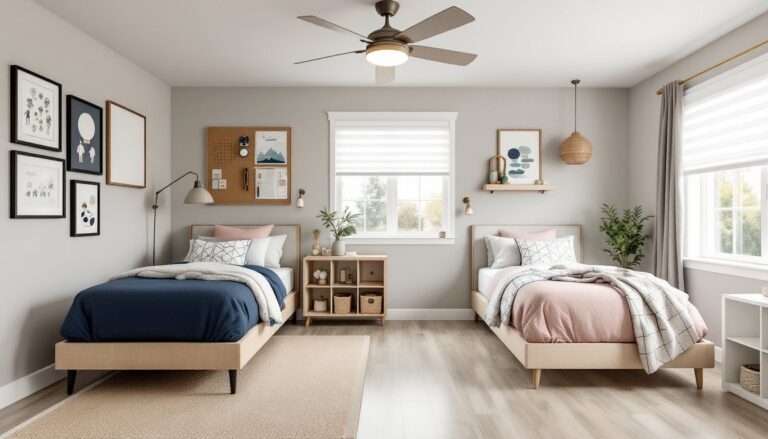
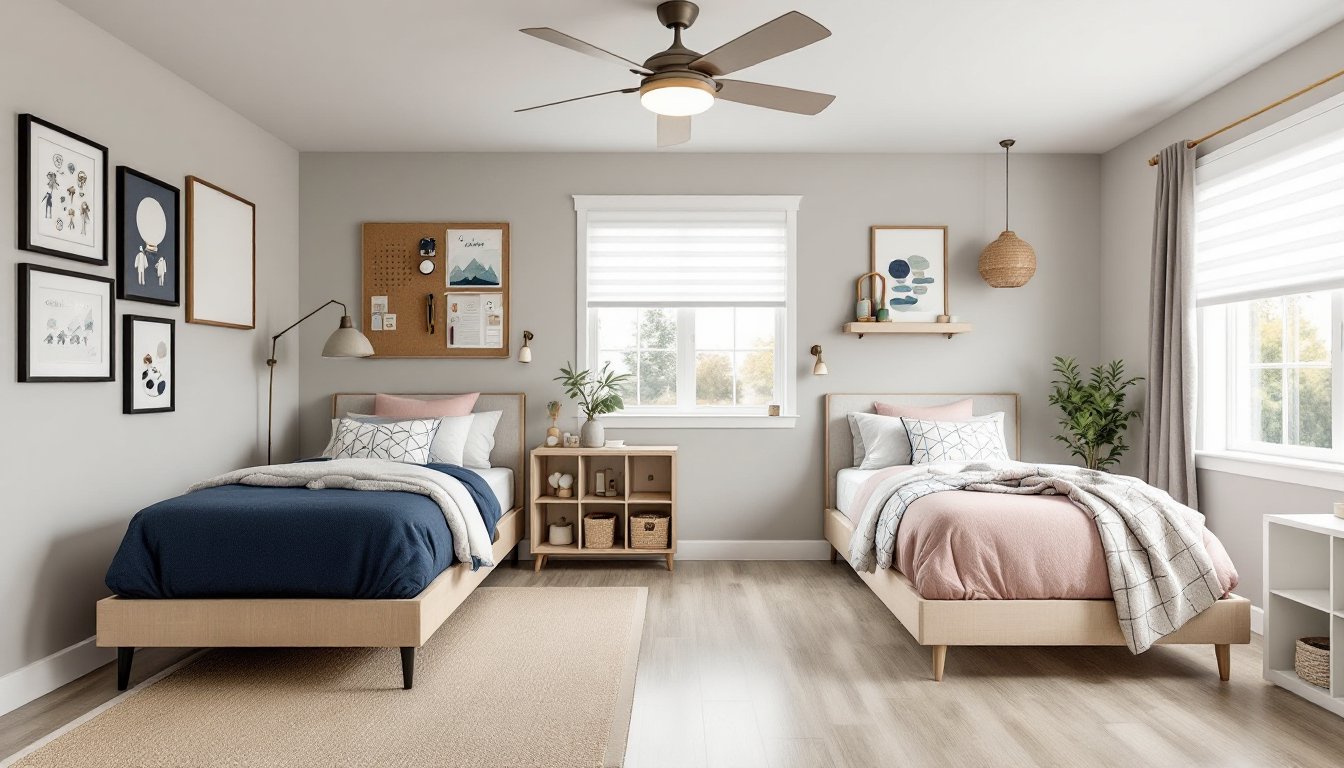
Layout tip: position beds along opposite walls with a shared central rug to define a play or reading zone. Avoid placing beds directly under windows in cold climates (heat loss) or next to exterior walls without proper insulation (condensation risk).
Individual Bedroom Ideas for Boys
Boys’ rooms benefit from durable, easy-clean materials. Skip light-colored carpet in favor of luxury vinyl plank (LVP) or engineered hardwood, both handle impacts, resist moisture, and can be installed as floating floors over existing subfloors (check that subfloor is level within 3/16 inch over 10 feet before installation).
For wall treatments, semi-gloss or satin-finish paint wipes clean better than flat or eggshell. If installing wall paneling (board-and-batten, tongue-and-groove, etc.), use 1×4 or 1×6 pine boards (actual dimensions 3/4″ x 3.5″ or 3/4″ x 5.5″) attached with finish nails into studs and construction adhesive. This adds texture and protects drywall from dings.
Modular storage systems, wire grid panels, pegboards, or slat walls, let boys organize sports gear, collections, or electronics without drilling new holes every few months. A 4×8-foot pegboard sheet runs around $20-30 and mounts directly to studs with 1-inch spacers behind it to accommodate hooks.
Consider task lighting early. A swing-arm wall-mounted lamp near the bed or desk eliminates cords and saves nightstand space. If wiring new fixtures, this requires running Romex through the wall and potentially a permit (check local building department), hire a licensed electrician unless you’re comfortable with electrical rough-in work and code requirements.
Built-in desks or floating shelves maximize floor space. Use 2×10 lumber (actual 1.5″ x 9.25″) for a wall-mounted desk surface, supported by heavy-duty brackets rated for at least 200 pounds. Finish with polyurethane or wipe-on poly for a durable surface that resists scratches and water rings.
Individual Bedroom Ideas for Girls
Girls’ rooms often emphasize color layering and texture rather than bold structural changes. Start with a neutral base wall color and add interest through textiles, window treatments, and accent furniture. Peel-and-stick wallpaper or stenciling offers a low-commitment way to add pattern without long-term repainting.
Crown molding or picture rail molding adds character without overwhelming the space. For a simple DIY install, use primed MDF molding (cheaper and more stable than solid wood) and a miter saw for clean corner joints. A pneumatic finish nailer speeds installation but isn’t required, a hammer and nail set work fine for smaller projects. Fill nail holes with spackling, sand, then touch up with paint.
Floating shelves display books, plants, or decor without taking floor space. Use 3/4-inch hardwood or plywood cut to size, supported by hidden floating shelf brackets (rated for 50-75 pounds each). Locate studs with a stud finder and anchor brackets with 3-inch wood screws, toggle bolts work for drywall-only mounting but support less weight.
For affordable budget-friendly makeovers, prioritize lighting upgrades. Swap builder-grade ceiling fixtures for a flush-mount or semi-flush pendant. Most ceiling boxes support fixtures up to 50 pounds: anything heavier requires a fan-rated box. Turn off power at the breaker before any electrical work, verify with a non-contact voltage tester.
Window treatments soften the space and provide blackout capability for better sleep. Cordless cellular shades or roller shades meet current safety standards (corded blinds are banned in many jurisdictions per CPSC guidelines). Measure the window width at three points (top, middle, bottom) and use the narrowest measurement for inside-mount shades.
Budget-Friendly DIY Projects to Personalize Any Kids’ Room
A painted accent wall or geometric pattern costs less than $50 in materials. Use FrogTape or 3M ScotchBlue painter’s tape (not masking tape) for crisp lines. Apply paint perpendicular to the tape edge with a small foam roller to prevent bleed-through. Remove tape while paint is still slightly tacky for the cleanest results.
DIY pegboard organizers take an afternoon and cost under $40. Cut a 4×4-foot pegboard panel to size with a circular saw or jigsaw, paint or stain as desired, then mount with 1×2 furring strips behind it to create hook clearance. Use 3-inch screws into studs for secure attachment. Add hooks, baskets, and shelves as needed, hardware is widely available at any home center.
Stenciled or hand-painted murals personalize a space without the cost of custom wallpaper. Use acrylic craft paint for small designs or interior latex paint for larger coverage. Seal with a matte clear coat if the design is in a high-contact area. This is a great project for involving kids, imperfections add character.
Rope lighting or LED strip lights (battery-powered or plug-in) add ambiance and function. Stick-on LED strips install in minutes along shelves, under loft beds, or around closet interiors. Choose warm white (2700-3000K) for a cozy feel or RGB color-changing strips for flexibility. Avoid placing any 120V wiring projects near water sources or in locations that require conduit per NEC without proper experience.
DIY upholstered headboards using 1×4 frame, plywood backer, foam padding, and fabric cost $60-100 depending on fabric choice. Staple fabric to the back, mount the finished panel to the wall with French cleats or Z-clips for easy removal. This avoids drilling into bed frames and provides flexibility as the room evolves.
Finally, involve kids in the process. Let them choose paint samples, help with taping, or select hardware finishes. Projects informed by DIY furniture projects often highlight how small changes, like swapping drawer pulls or adding peel-and-stick tile, make a big impact without major demo work. Ownership in the design process leads to better care and longer-lasting results.