Table of Contents
ToggleDining rooms serve as more than just a place to eat, they’re where families gather, guests linger over dessert, and conversations stretch late into the evening. The walls in this space set the tone for everything that happens within them. Whether someone’s working with a formal dining room or a cozy breakfast nook, the right wall decor can shift the entire feel from plain to purposeful. Most homeowners overlook their dining room walls, defaulting to a single framed print or leaving them bare. But with a few deliberate choices, and often minimal tools, these walls can become a defining feature of the home.
Key Takeaways
- Gallery walls and dining wall decor transform bare walls by mixing framed art, family photos, and textured objects with intentional spacing and consistent framing to create a curated, personal statement.
- Mirrors strategically placed opposite windows expand visual space, brighten the dining room, and add elegance without major renovations or permanent changes.
- Natural elements like shiplap, live edge shelves, and woven wall hangings introduce warmth and texture that soften hard edges while keeping installation simple with adhesives or basic hardware.
- Bold accent walls and murals deliver high visual impact with minimal effort—deep colors or custom designs transform the entire dining experience in a single weekend project.
- Functional shelving and plate displays combine storage with style, showcasing dishware and decor while keeping items organized and dust-controlled with regular maintenance.
- Seasonal rotations and personalized touches like framed recipes, shadow boxes, and wall sconces keep your dining room feeling intentional and lived-in throughout the year.
Gallery Walls That Make a Statement
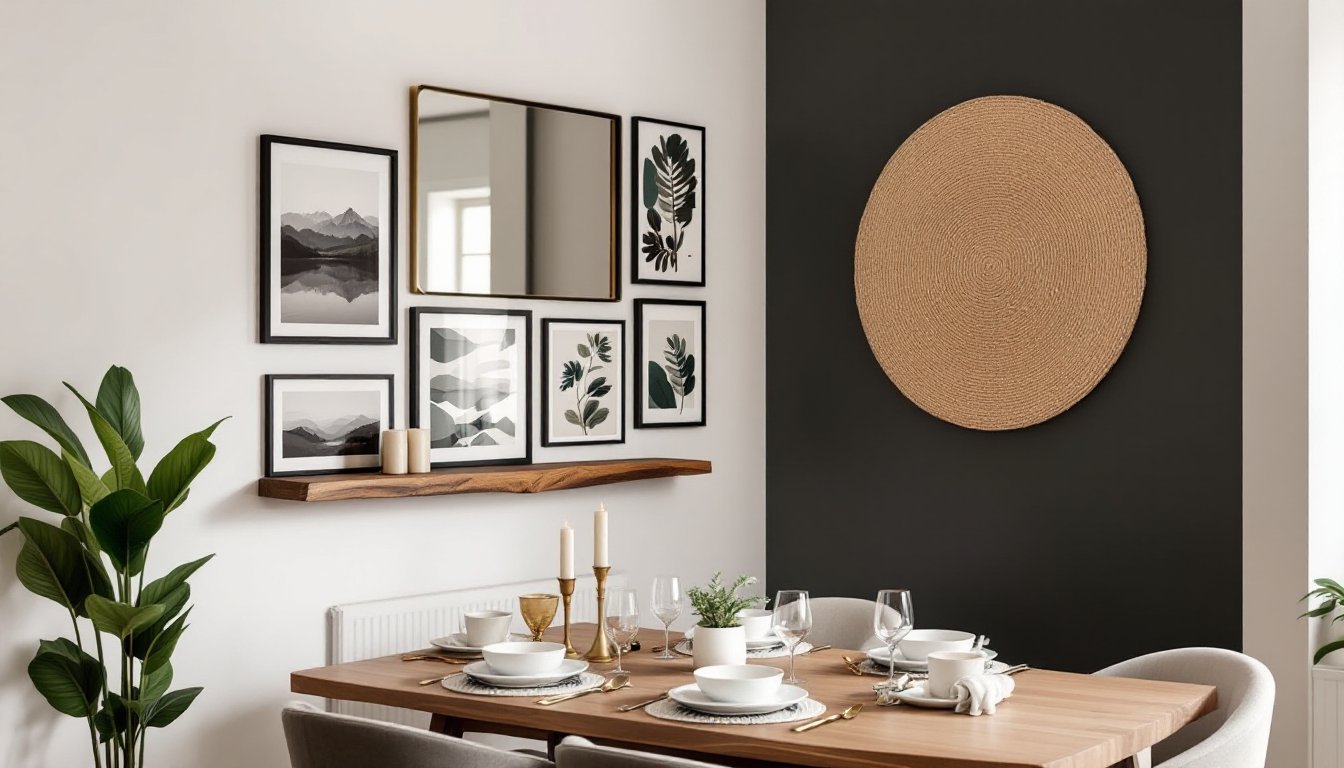
Gallery walls let homeowners curate a collection that reflects their tastes without committing to one oversized piece. The key is intentional layout and consistent framing or matting to tie disparate elements together.
Planning the Layout
Before hammering a single nail, lay the arrangement on the floor. Use painter’s tape on the wall to mark frame positions and step back to evaluate balance. Aim for 2–3 inches of space between frames. For a cohesive look, stick to frames in the same finish, matte black, natural wood, or brushed brass all work well.
Content Choices
Mix framed art prints, family photos, and even three-dimensional objects like small shelves or shadowboxes. Black-and-white photography pairs well with colorful abstract prints. Avoid the temptation to fill every gap: white space keeps the composition from feeling cluttered.
Hanging Hardware
Use picture hanging wire and D-rings for frames over 5 pounds. For lighter frames, adhesive strips work but won’t hold up in humid dining areas. Locate studs with a stud finder when possible, especially for the largest frames. A laser level ensures alignment across multiple pieces, worth borrowing if not buying.
Gallery walls work especially well in creative home ideas that blend personal mementos with design-forward choices.
Mirrors to Expand and Brighten Your Dining Room
Mirrors aren’t just for bathrooms and entryways. In dining rooms, they reflect natural light, visually double the space, and add a touch of elegance without the commitment of paint or wallpaper.
Placement Considerations
Hang mirrors opposite windows to maximize daylight. A large leaner mirror (at least 60 inches tall) propped against a wall creates drama without drilling into drywall. For a more traditional approach, mount a mirror at eye level, typically 57 to 60 inches from the floor to the center of the frame.
Frame Styles
Ornate gilt frames suit formal dining rooms, while simple wood or metal frames fit casual spaces. Frameless mirrors with beveled edges offer a clean, modern look. For a collected feel, group several small mirrors in varied shapes, round, hexagonal, and rectangular, on a single wall.
Installation Tips
Mirrors are heavy. Use wall anchors rated for the mirror’s weight if studs aren’t available. Toggle bolts work well in drywall: for plaster walls, use expanding anchors. Always hang mirrors with a helper, one person steadies while the other marks and drills. Wear safety goggles when drilling overhead.
Mirrors also complement home decor ideas that prioritize light and openness in smaller dining areas.
Natural and Textured Elements for Warmth
Wood, woven materials, and organic textures soften the hard edges of a dining space. These elements introduce warmth and contrast against painted drywall or tile.
Wood Wall Panels and Shiplap
Shiplap, horizontal planks with a slight gap between each board, adds rustic charm. Real wood (like pine or cedar) costs more but ages beautifully. MDF shiplap offers a budget-friendly alternative that takes paint well. Install with a brad nailer directly into studs, or use construction adhesive for a no-nail approach. Sand lightly and prime before painting.
Woven Wall Hangings and Baskets
Large woven pieces, think rattan, jute, or seagrass, bring texture without bulk. African baskets, macramé hangings, or even a single oversized woven tray mounted on the wall make strong focal points. Secure lightweight pieces with picture hanging strips: heavier items need screws into studs or anchors.
Live Edge Wood Shelves
A single floating shelf made from live edge wood (with the natural bark edge intact) serves as both decor and function. It’s a spot for candles, small plants, or a rotating display of seasonal items. Mount with heavy-duty floating shelf brackets rated for at least 50 pounds. Seal wood with polyurethane to protect against humidity and spills.
Texture-rich designs fit well within broader home ideas examples that favor natural materials and tactile variety.
Bold Accent Walls and Murals
An accent wall or mural transforms a dining room faster than any other single change. It’s a weekend project that delivers high visual impact.
Paint Choices
Deep, saturated colors, navy, forest green, charcoal, create intimacy and contrast. Use premium interior paint with a matte or eggshell finish: glossier finishes highlight wall imperfections. One gallon typically covers 350–400 square feet with two coats. Prime first if painting over dark colors or fresh drywall.
Wallpaper and Peel-and-Stick Options
Traditional wallpaper requires paste, a smoothing tool, and patience. Peel-and-stick wallpaper simplifies the process and allows for repositioning during application. Both options come in patterns from bold geometrics to subtle textures. Wallpaper often inspires dining spaces with dramatic flair, as seen in rooms with wallpaper showcasing layered design choices.
Hand-Painted Murals
For those with artistic confidence, or a hired muralist, a custom mural becomes the room’s centerpiece. Common themes include botanical illustrations, abstract shapes, or trompe-l’oeil scenes. Use acrylic paint for durability and easy cleanup. Seal with a clear matte varnish to protect the finish.
Prep Work
Fill nail holes and cracks with spackling compound, then sand smooth with 120-grit sandpaper. Wipe walls with a damp cloth to remove dust. Tape off trim, ceilings, and adjacent walls with painter’s tape (the blue stuff peels cleaner than masking tape). Lay drop cloths to protect floors.
Bold walls pair naturally with design inspiration found on sites like Decoist, which covers architectural features and color trends.
Functional Decor: Shelving and Plate Displays
Wall decor doesn’t have to be purely decorative. Shelves and plate racks add storage and display space while contributing to the room’s style.
Floating Shelves
Floating shelves create clean lines and showcase dishware, glassware, or decorative objects. Install them with concealed brackets mounted directly into studs for maximum strength. Space shelves 12–15 inches apart for standard dinner plates. Solid wood shelves (1×8 or 1×10 nominal, which measures ¾ inch thick by 7¼ or 9¼ inches wide) handle weight better than particle board.
Plate Racks and Rail Systems
Vertical plate racks display dishes without taking up counter space. Wire racks work for everyday dishes: wooden racks suit finer china. Picture rail molding installed near the ceiling allows plates to hang from adjustable hooks, easy to rearrange as collections grow.
Open Shelving Considerations
Open shelves expose contents to dust and grease, especially in dining areas adjacent to kitchens. Plan to wipe down shelves and items regularly. Arrange items by color or height for a curated look, mismatched clutter detracts rather than enhances.
Installation Steps
- Mark shelf placement with a level and pencil.
- Locate studs with a stud finder: mark with tape.
- Drill pilot holes to prevent splitting.
- Secure brackets with 3-inch wood screws into studs.
- Slide shelf onto brackets and check level before loading.
For kitchens open to dining areas, these ideas overlap with color and material advice featured on platforms like House Beautiful, which covers room makeovers and paint guides.
Seasonal and Personalized Touches
Rotating decor keeps a dining room from feeling stale. Seasonal updates and personal touches make the space feel lived-in and intentional.
Seasonal Swaps
Change out a few key pieces four times a year. In fall, swap bright artwork for warm-toned prints or a wreath made of dried leaves. Winter calls for evergreen garlands, candles, and metallic accents. Spring and summer benefit from botanical prints, light linens, and fresh flowers in wall-mounted vases.
Personalized Art and DIY Projects
Framed family recipes, vintage postcards, or children’s artwork make dining spaces feel personal. Shadow boxes preserve three-dimensional mementos, pressed flowers, vintage utensils, or travel souvenirs. DIY embroidery hoops with fabric or botanical specimens offer a handmade touch.
Chalkboard and Corkboard Walls
A section of wall painted with chalkboard paint serves as a rotating menu board or space for doodling. Corkboard tiles create a pin-up area for invitations, photos, and notes. Both are renter-friendly if installed with removable adhesive.
Lighting Integration
Wall sconces or picture lights highlight decor while adding ambient lighting. Install sconces 60–66 inches from the floor, centered on the wall or flanking a mirror or artwork. Hardwiring requires basic electrical skills or a licensed electrician: plug-in sconces with decorative cord covers offer an easier route.
Safety Note
When working with electrical installations, always turn off power at the breaker. Use a voltage tester to confirm wires are dead before touching them. If unsure, hire a licensed electrician, DIY electrical work may void homeowners insurance if not done to code.
Conclusion
Dining room walls offer more creative potential than most homeowners realize. Whether someone opts for a carefully arranged gallery wall, the warmth of natural textures, or the boldness of an accent wall, each choice reshapes how the space feels and functions. The best decor reflects the people who use the room, not a magazine spread. Start with one wall, one project, and build from there. The tools are simple, the materials accessible, and the results immediate.